
2026 Parent's Guide: Electric Ride-On Toys Australia
The most exciting ride-on isn’t automatically the right one for your backyard. If you’re comparing outdoor electric ride on toys australia, the best fit depends on your child, the surface they’ll ride on and the space available for play.
It’s natural to weigh fun alongside safety, supervision and practical details. Speed claims alone won’t tell you whether a ride-on suits your family. Check the product’s recommended age, maximum rider weight, suitable surfaces and the safety features confirmed for that specific model. Include a correctly fitted helmet and close adult supervision in your plan.
This guide compares outdoor play styles, from electric dirt bikes and 4x4 ride-ons to go-karts and hoverboards. You’ll learn what to check before choosing, including whether features such as a parent remote or overload protection apply to the model you’re considering. Hoveroo offers a range of children’s electric ride-ons, including dirt bikes, go-karts, 4x4 ride-ons and hoverboards. Start with your child’s needs and your available space, then compare the product details that matter.
Key Takeaways
- Compare outdoor electric ride on toys australia by riding style, controls and available play space, not speed claims alone.
- Use the manufacturer’s age guidance and maximum rider weight to check whether a ride-on is suited to your child.
- Check the intended surface and the product’s confirmed safety details before choosing a model.
- Use a parental peace of mind checklist to compare safety features, and plan for adult supervision during outdoor play.
- Make your shortlist easier: choose a style, check the fit, confirm the surface guidance and review the specifications.
Outdoor electric ride-on toys in Australia: what styles can families choose?
An electric ride-on toy is a child-oriented vehicle powered by an electric drive system. The category includes products children sit astride, sit low in or stand on, with different controls and play experiences for each style. Because outdoor electric ride on toys australia covers many kinds of products, start by picturing how and where your child will ride.
For background on a familiar battery-powered ride-on brand, you can read the Power Wheels overview. It’s a general reference, not a guide to whether a particular model suits your child or outdoor space. Check the manufacturer’s information for the product you’re considering.
How do electric dirt bikes, 4x4s and go-karts differ?
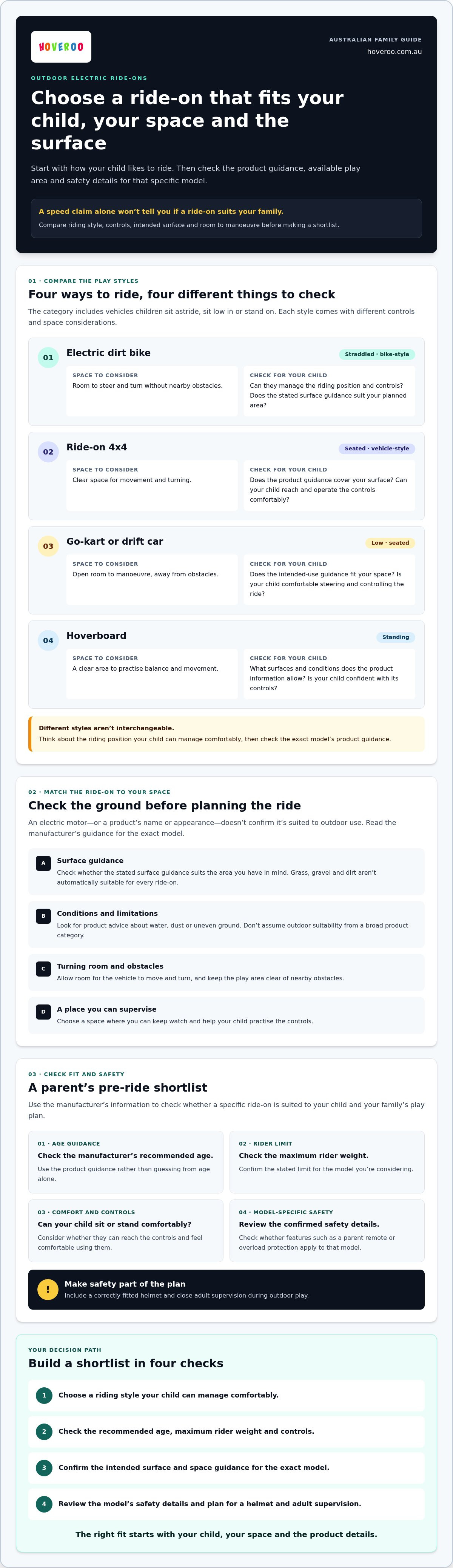
An electric dirt bike has a straddled riding position and a bike-style experience. A ride-on 4x4 offers a seated, vehicle-style format, while a go-kart keeps the rider low, with steering and other controls operated from the seat. Examples from Hoveroo’s range include the Thunderbolt Electric Dirt Bike, Voltrix TerrainMaster 24V 4x4 Ride On and Hoveroo SpeedDrift 24V Go Kart. Consider your child’s confidence, the room needed to turn and the surface they’ll use.
Drift cars and hoverboards offer different ways to ride. A drift car gives children a seated, car-style play experience; a hoverboard is ridden standing, so balance and the model’s specific controls matter. These aren’t interchangeable choices. Consider which position your child can manage comfortably, then check the product guidance before deciding where it can be used.
Are all electric ride-ons designed for outdoor play?
No. An electric motor doesn’t confirm that a toy is suited to outdoor use. Check the manufacturer’s stated surface guidance and environmental limitations, including any advice about water, dust or uneven ground. Don’t assume a product is suitable for grass, gravel or outdoor conditions based on its appearance or name alone.
Some ride-on types are associated with outdoor adventures, while others may be intended for different settings. Confirm the intended use for the exact model before planning a ride. Product guidance is the best starting point, not a broad category label. This helps you match the play style to your space and plan for adult supervision.
Match an outdoor electric ride-on to your child and play space
The best match depends on more than a vehicle’s appearance. Think about where your child will ride, how much room they’ll need to turn and whether they feel comfortable using the controls. Use this table to make a shortlist, then check the manufacturer’s guidance for each model.
| Vehicle style | Riding position | Space to consider | Questions to check |
|---|---|---|---|
| Electric dirt bike | Straddled, bike-style | Room to steer and turn without nearby obstacles | Is the stated surface guidance suitable for your planned area? Can your child manage the riding position and controls? |
| Ride-on 4x4 | Seated, vehicle-style | Clear space for movement and turning | Does the product guidance cover your surface? Can your child reach and operate the controls comfortably? |
| Go-kart or drift car | Low, seated | Enough open room to manoeuvre, away from obstacles | Does the intended-use guidance fit your space? Is your child comfortable steering and controlling the ride? |
| Hoverboard | Standing | A clear area to practise balance and movement | What surfaces and conditions does the product information allow? Is your child confident with its controls? |
Which ride-on style suits a backyard, path or open play area?
Look at the surface, turning room and nearby obstacles. Grass, gravel and dirt aren’t automatically suitable for every ride-on, so confirm the guidance for the exact product before choosing a spot. For more ideas on comparing outdoor-focused options, read this Australian guide to off-road ride-on cars.
Plan how you’ll supervise, too. Choose a space where you can keep watch and help your child practise the controls. If your shortlist includes toys with button or coin batteries, consult Product Safety Australia’s information on mandatory safety standards for button batteries.
How should you check age, fit and rider limits?
Follow the manufacturer’s stated age guidance and maximum rider weight rather than guessing based on your child’s age or size. Check whether your child can sit or stand comfortably, reach the controls and understand the instructions. Their confidence matters, too. A ride-on they can operate with adult supervision is a better fit than one chosen for looks alone.
Use the same checks when comparing children’s electric ride-on styles: product guidance, fit, surface and your supervision plan. This is a practical way to narrow down outdoor electric ride on toys australia and find a play style that works for your child and space.
Outdoor ride-on safety: the checks parents should make first
Safety isn’t a single feature or label. When comparing outdoor electric ride on toys australia, check the details for the exact model, then consider how your child will use it and how you’ll supervise. A feature can be useful, but it doesn’t replace a suitable fit, protective gear and an adult keeping watch.
Use a parental peace of mind checklist to compare confirmed safety information across products. Look for clear instructions and specifications, and check which features apply to that particular ride-on. Don’t assume a feature listed for one model is included on another.
What belongs on a parental peace of mind checklist?
Check the product information for its maximum rider weight, any stated protective equipment and the controls available to an adult. Consider a parent remote or parental remote override only if the manufacturer confirms it for that model. If speed controls are listed, check how they work and whether they suit your child’s experience.
Look for overload protection only when it’s confirmed for the specific product. Read the product information to understand what the feature does and whether it applies to the model you’re considering. It doesn’t tell you whether the whole ride-on is suitable for your child, so check the other product guidance as well.
UL 2272 certification relates to the applicable hoverboard product, not automatically to every electric ride-on. If certification matters to your decision, check the product’s own documentation and confirm which model it covers.
What should you check before each outdoor ride?
Make a quick check part of the routine. Look for visible damage, make sure the controls respond as described in the instructions and scan the riding area for obstacles or other people. Follow the manufacturer’s guidance for set-up, use and care, including advice about the intended surface and outdoor conditions.
- Helmet and protective gear: Use a correctly fitted helmet and any other gear recommended for the product. Check the manufacturer’s instructions for guidance on what’s suitable.
- Controls and readiness: Remind your child how to start, steer and stop, following the product instructions. Check that they’re comfortable with the controls before riding.
- Adult supervision: Stay close enough to monitor the ride and help, especially while your child is learning. Keep watching as their confidence grows.
A calm check before the first ride, and before later sessions, helps make room for excitement while keeping adult oversight front and centre.
Compare outdoor ride-on features without getting distracted by speed
A big speed claim doesn’t show whether a ride-on suits your child, your space or the way you’ll supervise. Compare practical details first: controls your child can understand, the stated rider limit, the surfaces the manufacturer recommends and the level of adult oversight the product may need. These details help you judge fit without treating different vehicle styles as if they perform in the same way.
Motor wattage or battery voltage alone can’t establish a ride-on’s suitability or real-world performance. Treat them as specifications to read alongside the rest of the product information, not as a shortcut to deciding what will work in your yard. A product name that includes “24V”, for example, doesn’t tell you whether its controls, rider limits or surface guidance suit your child.
Which features matter more than a headline performance claim?
Start with your child’s comfort using the controls and the intended play environment. Then check each feature against the exact product listing or manual. Don’t transfer details between vehicle types, even if they share a brand or a similar-looking design.
- Controls: Check what the rider operates and whether any adult controls are confirmed for that model.
- Rider limits: Compare the manufacturer’s maximum rider weight with your child’s needs.
- Surface guidance: Confirm where the product is intended to be used, rather than assuming it suits grass, gravel or other surfaces.
- Specific features: Look for confirmed details such as air-filled tyres, a dual-speed system or automatic auto-lock braking. Don’t assume any are included unless the product information says so.
A 24V battery is one specification to consider alongside the product’s other details. The voltage figure alone doesn’t establish whether a particular ride-on suits your child or play area.
How can you assess suitability for Australian outdoor conditions?
Check the manufacturer’s care, charging and environmental guidance before using or storing a ride-on outdoors. If water or dust exposure is a concern, look for a confirmed IP rating in the product information. Don’t infer weather resistance from a vehicle’s appearance. Follow the stated surface and weather guidance rather than making broad assumptions about durability.
If an electric dirt bike is on your shortlist, this electric dirt bike guide for Australian families can help you explore that style. For a final comparison, review the confirmed specifications for each option in Hoveroo’s children’s ride-on range and match them to your child, play space and supervision plan.
Choose your outdoor electric ride-on and plan the first ride
You’ve compared play styles, space and product details. Bring the decision together with a quick check before you choose. The right option depends on your child and where you plan to ride, not on one feature being a universal winner. Use this sequence to narrow down outdoor electric ride on toys australia:
- Choose a vehicle style. Decide whether your child is drawn to a dirt bike, 4x4, go-kart, drift car or hoverboard, and consider which riding position feels manageable.
- Check the fit. Read the manufacturer’s age guidance and maximum rider weight. Consider whether your child can reach and operate the controls comfortably.
- Confirm the intended surface. Match the planned riding area to the product’s stated surface guidance and environmental limits.
- Review the safety details. Check the instructions, confirmed safety features and any protective equipment specified for that model.
Compare the product information side by side before deciding. Don’t carry a feature or specification across from one model to another, even if two ride-ons look similar. Hoveroo’s range includes different play styles, such as the Thunderbolt Electric Dirt Bike, Voltrix TerrainMaster 24V 4x4 Ride On and Hoveroo SpeedDrift 24V Go Kart. Compare each with your family’s needs rather than treating any one model as a fit for every child.
What should you prepare before your child rides?
Choose an open area that matches the product’s stated guidance, with room to move and no nearby obstacles. Prepare a correctly fitted helmet and any protective equipment recommended for that ride-on. Before setting off, read the instructions together and show your child how to use the controls. Keep the first try calm and gradual, staying close to supervise and offer help as they learn.
Keep checking in as your child gets familiar with the ride. Comfort with the controls can take practice, and adult oversight remains part of the plan even when a child is keen to ride independently.
Where can you compare ride-on styles for your family?
If kart-style play is on your shortlist, the Australian electric go-kart guide is another place to explore that style. Then compare the relevant product’s current specifications, intended use and safety details with your child’s fit and play space.
Ready to browse? Explore Hoveroo’s electric ride-on range and confirm the product-specific details before you decide. A little planning can make the first ride exciting for your child and considered by you.
Make your next ride-on choice with confidence
The best outdoor electric ride on toys australia choice starts with your child, your play space and the way you’ll supervise. Match the vehicle style to your child’s comfort with its riding position and controls. Then check the manufacturer’s age guidance, maximum rider weight, intended surface and product-specific safety information. A speed claim or single feature can’t tell you whether a ride-on is the right fit.
As you compare Hoveroo’s range, confirm the current specifications for the exact model you’re considering. Check any safety features, protective equipment or certification against that product’s information rather than assuming they apply across the range.
Ready to explore different play styles? Browse Hoveroo’s electric ride-on range and compare the details that matter to your family. With a considered choice and a supervised first ride, you can help make outdoor play exciting and fun.
Frequently Asked Questions
Are outdoor electric ride-on toys suitable for every backyard surface?
No. Outdoor use depends on the specific ride-on and its manufacturer’s surface and care guidance. An electric motor or rugged appearance doesn’t confirm a vehicle is suitable for every yard. Before choosing among outdoor electric ride on toys australia, check the stated surfaces, environmental limitations and any advice about uneven ground. Also consider turning space, obstacles and whether you can supervise your child comfortably in the planned riding area.
How do I choose between an electric dirt bike, ride-on 4x4 and go-kart?
Choose by matching the riding position and controls to your child, then consider the play space. An electric dirt bike has a straddled, bike-style position; a 4x4 offers a seated vehicle-style ride; and a go-kart keeps the rider low and seated. Check each model’s intended surface, turning needs, age guidance and rider limit. Your child’s comfort with the controls and your supervision plan matter more than a style’s appearance.
What age can a child use an electric ride-on toy?
Follow the manufacturer’s stated age guidance for the exact model. There isn’t one age that applies to every electric ride-on, because designs, controls and rider requirements differ. Check the product information alongside its maximum rider weight, and consider whether your child can understand the instructions and manage the controls. Stay nearby during use, particularly while they’re learning. If guidance is unclear, seek clarification from the seller or manufacturer before deciding.
What safety gear should my child wear on an electric ride-on?
Use a correctly fitted helmet and any protective equipment recommended in the product instructions. Gear should suit the specific ride-on and fit your child properly, so check the manufacturer’s guidance rather than assuming one set works for every style. Keep adult supervision part of the plan, too. Before riding, look over the vehicle, controls and play area, and remind your child how to use the ride-on as described in its instructions.
Can children use electric ride-on toys on grass or gravel?
Only if the manufacturer’s guidance for that specific model permits the surface. Some products may be designed for particular terrain, while others may have different intended-use limits. Don’t assume grass or gravel is suitable based on the vehicle’s name, tyres or appearance. Check the surface guidance and any environmental limitations, then choose a clear area with enough room to turn and supervise your child as they ride.
What is the parental peace of mind checklist for ride-on toys?
A parental peace of mind checklist is a way to compare confirmed safety details for each model. Check the stated maximum rider weight, age guidance, instructions and any protective equipment. Look for features such as a parent remote, parental remote override or speed controls only when the product information confirms them. If overload protection is listed, check that it applies to that model. No single feature replaces a suitable fit and adult supervision.
Does UL 2272 certification apply to every electric ride-on toy?
No. UL 2272 certification shouldn’t be assumed to cover every electric ride-on or hoverboard. If certification is relevant to your choice, check the product’s documentation to confirm whether the exact model is certified and what the claim covers. Don’t transfer a certification claim from one product to another, even within the same range. Review the remaining product-specific safety details as well, since certification alone doesn’t establish suitability for your child or play area.
How do I check whether an electric ride-on suits my child’s size?
Check the manufacturer’s age guidance and maximum rider weight for the exact model, then assess how your child fits the riding position. They should be able to reach and use the controls as intended and follow the instructions. Don’t choose based only on age, height or how long you hope the toy will last. If the product details don’t make the fit clear, ask the seller or manufacturer before purchase.