
Kids' Hoverboard Safety: The Aussie Parent's 2026 Guide
Hoverboarding isn't actually about your child balancing the board; it's about your child learning to trust the board to balance them. It sounds counterintuitive, but once they stop fighting the tech, they start gliding with ease. We know the drill. You're worried about high-speed spills on the driveway or those confusing myths about battery fires. It's completely normal to feel a bit of "hover-anxiety" when your little one wants to level up their outdoor play. You want the thrill of adventure without the trip to the emergency room.
This guide is your ultimate 2026 roadmap to mastering how to ride a hoverboard safely for kids with total confidence. We'll show you exactly how to teach the basics using the latest self-balancing gyroscopes. You'll learn which surfaces are best for beginners and why UL 2272 battery certification is the only standard that matters for your peace of mind. We're diving into the best safety gear and the state-by-state rules you need to know before they hit the backyard. Let's get your grommet gliding safely today.
Key Takeaways
- Learn how internal sensors and self-balancing gyroscopes work together to create a stable, stress-free foundation for every beginner.
- Master our proven 30-minute teaching framework to show your little ones how to ride a hoverboard safely for kids without the pressure.
- Identify the non-negotiable safety kit required for Aussie riders, including the 'Big Three' essentials that protect against every spill.
- Understand the mechanics of differential steering to help your child glide, turn, and stop with complete confidence and precision.
- Choose the right gear for your specific environment, from smooth suburban driveways to rugged off-road backyard trails.
What is a Self-Balancing Board for Children?
A self-balancing board is a motorised personal transporter that uses advanced gyroscopes to maintain perfect stability while your child glides. If you've ever wondered What is a Self-Balancing Board, it's essentially a smart platform that does the heavy lifting of balancing for you. In 2026, this technology has evolved into something truly spectacular. It's no longer just about moving; it's about providing a rock-solid foundation for young riders to gain confidence from their very first go.
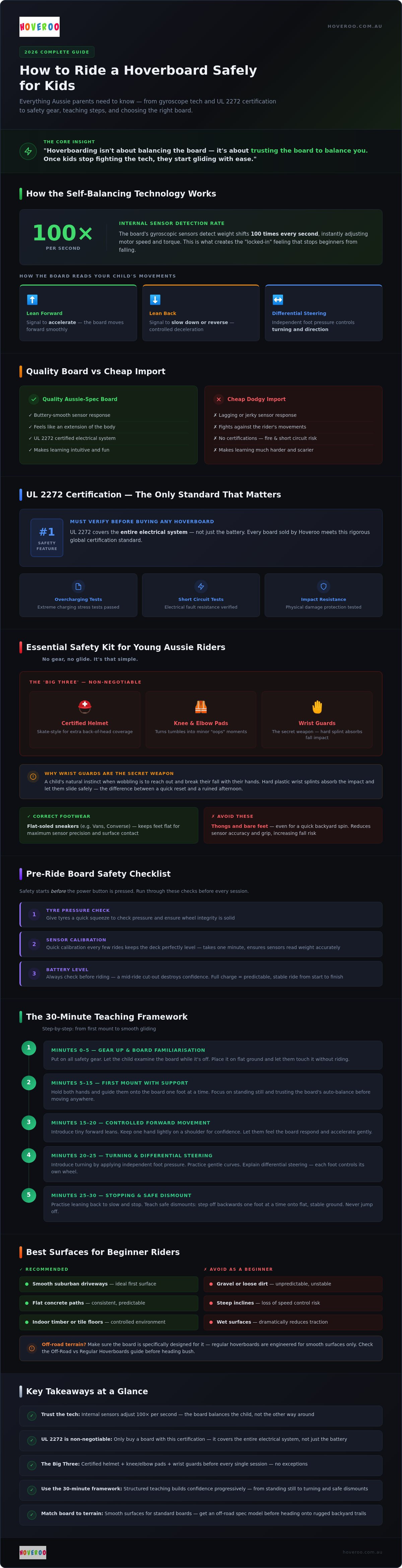
The internal sensors are the real heroes here. They detect weight shifts 100 times per second, adjusting the motor speed and torque instantly. This is where high-quality Aussie-spec boards shine compared to cheap, dodgy imports. A quality board provides a buttery-smooth response that feels like an extension of the body. A cheap one might lag or jerk, which makes learning how to ride a hoverboard safely for kids much harder than it needs to be. You want a board that feels intuitive, not one that fights against your child's movements.
How Gyroscopic Technology Works
Think of the gyroscope as the board's digital "brain." It works tirelessly to keep the deck level at all times, even before a rider steps on. When your child mounts the board, the system interprets their every move with incredible precision. Leaning forward isn't a fall; it's a signal to accelerate. Leaning back is a signal to slow down or reverse. Because the board reacts so quickly, it prevents that common fear of the board "shooting out" from underneath. It creates a locked-in feeling that helps kids focus on the fun rather than the fear of falling.
UL 2272 Certification: The Gold Standard
Battery safety is a non-negotiable topic for any Aussie parent. UL 2272 certification is the specific safety standard that covers the entire electrical system, not just the battery. It means the board has passed extreme tests for overcharging, short-circuiting, and even impact resistance. This is the #1 safety feature you must verify before buying any ride-on. We take this seriously at Hoveroo. Every board we sell meets these rigorous global certifications. It's about ensuring that the only thing your kids have to worry about is which way to turn next. You get total peace of mind while they get total freedom.
The Essential Safety Kit for Young Aussie Riders
Safety gear isn't just a suggestion; it's the golden rule for every single session. No gear, no glide. It's that simple. When you're teaching your grommet how to ride a hoverboard safely for kids, the right kit builds the confidence they need to push their limits. It transforms a potential tumble into a minor "oops" moment. We want them focused on the thrill of the ride, not the fear of the bitumen.
We always recommend the 'Big Three' for every rider: a certified helmet, knee and elbow pads, and high-impact wrist guards. While most parents remember the helmet, wrist guards are often the secret weapon for beginners. Why? Because when a child feels a wobble, their natural instinct is to reach out and break their fall with their hands. Quality wrist guards feature a hard plastic splint that absorbs the impact and lets them slide safely. It's the difference between a quick reset and a ruined afternoon. Before they suit up, make sure you've matched their setup to their environment. Check out our Off-Road vs Regular Hoverboards guide to ensure their board is built for the specific terrain they're tackling.
Choosing the Right Helmet and Footwear
A snug-fitting skate-style helmet is the way to go for hoverboarding. Unlike standard bike helmets, these are designed to provide extra coverage at the back of the head. This is vital if a rider accidentally leans too far back and slips. Now, let's talk feet. Ditch the thongs and forget about going barefoot, even if it's just a quick spin in the backyard. You need flat-soled sneakers, like Vans or Converse, to get maximum surface contact. These shoes allow the feet to stay flat, which helps the sensors read every movement with total precision.
Pre-Ride Board Safety Checks
Safety starts before the power button is even pressed. Give the tyres a quick squeeze to check pressure and ensure the wheel integrity is solid. Every few rides, perform a quick calibration to keep the deck perfectly level. It only takes a minute but ensures the sensors are reading your child's weight accurately. Finally, always check the battery level. A mid-ride cut-out is a surefire way to lose confidence, so keep those durable Hoveroo boards topped up and ready for action. A full charge means a predictable, stable ride from start to finish.
Step-by-Step Guide: From First Mount to Smooth Gliding
Learning how to ride a hoverboard safely for kids is a rite of passage in 2026. It's a moment of pure magic when the tech clicks and they start to glide. To make this happen without the drama, start in a "no-pressure" zone. A flat, carpeted living room or a patch of short, dry backyard grass is perfect. These surfaces provide just enough resistance to keep the board from rolling away too quickly while your little ripper finds their centre of gravity. We've developed a 30-minute framework that simplifies the process, turning a shaky start into a victory lap.
As the parent, your role is the "Spotter." Stand directly in front of your child. Offer your hands as a steadying rail, but avoid pulling or pushing them. Let them find their own balance point. If you pull them, you'll accidentally trigger the sensors and make the board lurch. Remind them to keep their eyes up. If they look down at their feet, their weight shifts forward and the board will move before they're ready. "Eyes on the horizon, feet on the board" is the mantra for success.
The Perfect Mount and Dismount
Getting on and off is where most beginners feel the most heat. Follow these three steps for a rock-solid start:
- Step 1: Have them place their dominant foot on the board first. Ensure it's flush against the outer wheel arch for maximum control.
- Step 2: Tell them to bring their second foot up quickly but calmly. They should stand tall with their legs straight but not locked.
- Step 3: This is the big one. To dismount, they must always step off the BACK of the board. Stepping off the front is a rookie mistake that often leads to the board clipping their heels. One foot back, then the other. Easy does it.
Moving Forward, Backward, and Stopping
Once they're standing tall, it's time to move. Teach them that the board responds to pressure, not big body leans. To move forward, they just need to gently press their toes down. It's a tiny movement, like pressing a button with their big toe. To slow down or reverse, they apply light heel-pressure. The goal is to find the "neutral" position. This is the sweet spot where they stand perfectly level and the board comes to a dead stop. Practice this neutral stance repeatedly until they can find it without thinking. Confidence comes from knowing they can stop whenever they want.
Mastering Manoeuvres: Turning, Stopping, and Safe Dismounts
Your child isn't just riding one board. They're actually standing on two independent platforms working in perfect harmony. This is the secret to mastering how to ride a hoverboard safely for kids. We call it 'differential steering'. Think of it like a tank or a rowboat. Each foot controls its own motor. If they want to spin, one foot goes forward while the other stays still. It's that simple! But what happens when things get shaky? Speed wobbles usually happen when a rider gets tense. Tell your little one to relax their ankles and gently slow down. If they feel like they're losing it, it's always better to bail safely than to try and 'save' a wobbly board. For those who want more stability, check out our Hoverkart attachment guide for a seated adventure.
The Secret to Smooth Turning
Turning is all about subtle toe pressure. To turn left, they gently press their right toes down. To turn right, they press the left. It feels like magic once they get it! Start with wide, sweeping 'S' turns across the driveway. This builds the muscle memory needed for tighter manoeuvres later. A pro tip? Keep the upper body completely still. Let the legs and feet do all the work. If they start swinging their arms or twisting their waist, they'll lose that smooth, controlled glide. Focus on the feet, and the rest will follow!
The Emergency Dismount and Safe Falling
Every rider falls eventually. It's part of the journey! The key is knowing how to do it without the tears. Practice the 'step-off' drill on the grass before hitting the bitumen. If they feel off-balance, they should step back quickly. One foot, then the other. Never step forward! If a tumble is unavoidable, teach the 'tuck and roll' method. They should pull their arms in and roll onto their shoulder. This protects their wrists and head from direct impact. Jumping clear of the board is always the safest bet. Don't let them try to fight a wobble. Just reset and go again! Ready to get them started? Shop our UL 2272 certified Hoveroo range and start their adventure today.
Finding the Right Hoveroo for Your Family Adventures
Choosing the right gear is the final piece of the puzzle. The Hoveroo Hoverboard is our classic ripper, designed specifically for those smooth suburban driveways and flat concrete paths. It's nimble, responsive, and incredibly easy to handle. But what if your backyard is more "outback" than "pavement"? That's where the Off-Road Hoverboard comes into play. It's built tough to handle the grass and gravel that would stop a standard board in its tracks. Both options prioritise safety without sacrificing an ounce of the fun.
We've included a brilliant 'Training Mode' on most of our models. This is a total game-changer for parents! It caps the top speed, allowing your child to focus on how to ride a hoverboard safely for kids without the risk of going too fast too soon. As their confidence grows, you can adjust the settings to match their skill level. Best of all, we're a local Australian company. You get the peace of mind that comes with local support and boards that are purpose-built for our unique conditions. We're here to ensure your family adventure stays on track from the first glide to the thousandth.
Standard vs Off-Road: Which is Safer?
Tyre size matters more than you think. Our standard 6.5-inch wheels are light and agile, making them the best choice for smooth, level surfaces. However, if your grommet is tackling uneven ground, the 8.5-inch tyres on the Off-Road Hoverboard are the way to go. These larger wheels provide a much wider footprint and significantly more stability. They roll over small sticks, stones, and cracks that might cause a smaller wheel to "hang up" or jerk. By matching the board to your primary riding environment, you reduce the risk of unexpected stops and keep the ride buttery smooth.
Why Aussie Parents Choose Hoveroo
It's not just about the high-tech gyroscopes; it's about the total experience. Our boards come in a range of vibrant colours that look incredible in the Aussie sun. We've packed them with bright LED lights that do more than just look "cool." They massively increase visibility, which is a huge safety plus when the sun starts to dip during late afternoon backyard sessions. Throw in the built-in Bluetooth speakers, and you've got a learning experience that feels like a celebration. It keeps kids engaged, excited, and ready to ride every single day. Ready to join the squad? Check out our full range of kids hoverboards here!
Start Their Hoverboard Journey Today
Mastering how to ride a hoverboard safely for kids is all about blending the right gear with a bit of practice. You've seen that safety starts with the 'Big Three' and trusting the board's smart sensors to do the heavy lifting. Whether they're cruising smooth paths or tackling the rough stuff on an Off-Road Hoverboard, the goal is pure, infectious joy. It's time to swap the screens for the great outdoors and watch their confidence soar!
We're here to make that transition stress-free. Every board we offer features UL 2272 Certified Batteries and is specifically designed for Aussie kids and backyards. With local Australian customer support just a phone call away, you're never on this journey alone. Let's get your little ripper gliding with the best tech available in 2026.
Explore the Hoveroo Hoverboard Collection – Safe, Certified & Aussie-Approved!
The adventure is just beginning. Keep the helmet snug, the eyes up, and let the good times roll!
Frequently Asked Questions
Is it hard for an 8-year-old to learn to ride a hoverboard?
Teaching how to ride a hoverboard safely for kids is often easiest with 8-year-olds because they have a naturally low centre of gravity. Most Aussie kids pick up the basics in under fifteen minutes once they stop overthinking the balance. With our Training Mode active, the board responds gently to every little toe-press. It's all about letting the tech do the work while they stay relaxed. Most grommets are gliding solo before the first session ends.
What is the safest age for a child to start hoverboarding?
Most manufacturers recommend starting at 8 years old, as this is when kids generally have the motor skills and weight to trigger the internal sensors. While some younger rippers might try it, 8 is the sweet spot for maintaining balance and following safety rules. Always check the weight requirements for your specific model. It ensures the gyroscopes can accurately detect their shifts and keep the platform perfectly level during the ride.
Can my child ride their hoverboard on the grass or in the backyard?
Yes, but only if you have a model with larger wheels like our Off-Road Hoverboard. Standard boards with 6.5-inch wheels are strictly for smooth bitumen or concrete. Riding on thick grass with small wheels can cause the motors to overheat or the board to stop suddenly. If your backyard is a bit rugged, the 8.5-inch tyres are a must. They'll roll over clover and gravel without breaking a sweat.
How do I stop the hoverboard from shaking when my child stands on it?
Shaking usually happens because the rider is tense or their weight is too light for the sensors. Tell your child to relax their ankles and press their feet firmly against the outer wheel arches. If the board continues to vibrate, it might need a quick recalibration. Turn it off, level the deck perfectly, and hold the power button for 10 seconds. This resets the "brain" and ensures a smooth, shake-free experience.
Are hoverboards safe to use inside the house?
Hoverboards are great for indoor practice on carpet, which provides excellent grip and a soft landing. However, you must clear a wide space away from furniture, stairs, and sharp corners. Avoid tiled or polished timber floors until they've mastered the basics, as these can be quite slippery. Practising inside is a brilliant way to learn how to ride a hoverboard safely for kids before they head out to the driveway.
What should I do if my child falls off their board?
Stay calm and perform a quick check of their gear and well-being. If they're wearing the 'Big Three' safety kit, most falls are just minor tumbles. Encourage them to get back on once they've caught their breath. Check the board for any scuffs or sensor errors before they restart. Remind them to use the "step-off the back" rule to avoid the board clipping their heels on the next go.
How long does it take for a beginner to feel confident?
Most beginners feel a massive boost in confidence within the first 30 to 60 minutes of riding. The first 10 minutes are usually the shakiest while they learn to trust the gyroscopes. Once they realise the board won't shoot out from under them, they'll start experimenting with turns. By the second or third session, most Aussie kids are zooming around the backyard like they've been doing it for years.
Is it legal to ride hoverboards on Australian footpaths in 2026?
Laws vary significantly across Australia in 2026, so always check your local state government website before heading out. In Queensland, they're permitted on footpaths with a 12km/h limit. However, in New South Wales, they're restricted to private property, with fines for illegal public use reaching up to $2,200. Victoria and Western Australia have similar private-use restrictions. Stick to the backyard or driveway to ensure your ripper stays on the right side of the law.