
Self balancing board for children: 2026 pricing and safety specs
Australian families comparing a self balancing board for children in 2026 face a clear price band: market listings typically range between A$116 and A$259 according to recent research across 87 retailer listings. Selecting the right self-balancing board (self-balancing scooter) means weighing fire safety certified (UL 2272 certification) status against weight limits, age fit and how you plan to ride at home. This guide walks those decision points so you can kickstart your child's next backyard adventure with clear specs, not guesswork.
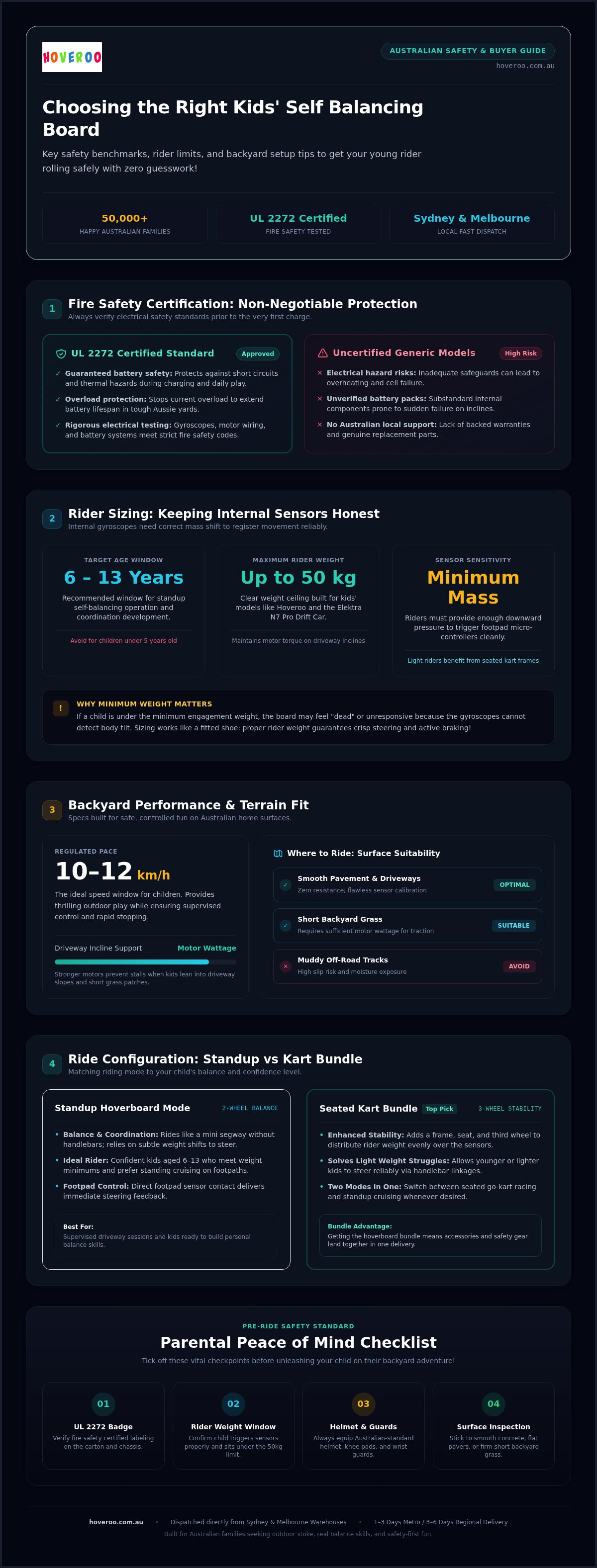
Key Takeaways: A safe self balancing board for children requires UL 2272 fire safety certification and typically costs between A$116 and A$259 in the Australian market.
- Riders must weigh enough to trigger internal sensors, with models like Hoveroo supporting up to 50kg.
- Avoid these boards for children under age five or for use on muddy off-road tracks.
- Select an all-in-one bundle for younger riders to gain three-wheel stability via a seated kart.
Pick the board that matches how your child actually rides
When your kids want to zoom around the backyard, the right self balancing board turns spare time into real stoke, provided safety certification and physical limits line up with the rider you have at home.
Segment guide (typical situations):
- Confident rider, 6–13, flat driveway play: choose a UL 2272 certified standup board in the common market band and confirm they sit inside the stated weight window (models such as the Elektra N7 Pro Drift Car support riders up to 50kg).
- Younger or less steady rider who still wants outdoor speed: add a seat attachment so three-wheel stability shares the load with the board’s sensors.
- Family that wants pavement plus short grass sessions without buying twice: favour an all-in-one set (hoverboard bundle) so freight and accessories land together.
Certified models reduce electrical hazard risk so your young riders stay protected during everyday play. Browse Hoverboard options for sale in Australia when you are ready to match a board to that plan. Genuine boards need proper fire safety certified protection for local conditions.
What a self balancing board for children actually does
A self balancing board uses internal gyroscopes to keep your child upright while riding. Micro-controllers send power to internal wheel motors based on tiny weight shifts: you tilt forward to move, or lean back to slow down. Treat fire safety certified battery systems as non-negotiable before the first charge.
You can grab an all-terrain kids hoverboard when you want a UL 2272 certified build aimed at mixed home terrain. Hoveroo models are built for rugged Australian yards. These boards work like mini segways without handlebars, building balance and coordination as kids learn weight shift control.
Weight and age limits that keep sensors honest
A self balancing board only steers cleanly when the rider meets its weight and age window. Market listings commonly place these rides with kids aged 6–13.
Riders must meet the minimum weight limit so internal sensors register movement properly; without enough mass, motors may not trigger reliably. One client pattern we see: a family buys for a light younger child, the board feels “dead” on the driveway, then play only clicks once they either wait for the child to reach the minimum or switch to a seated kart frame that steadies input. The Elektra N7 Pro Drift Car suits children aged 6–13 and supports riders up to 50kg, which is a concrete ceiling you can measure against before checkout. Proper sizing works like a fitted shoe for control, not a fashion extra.
See the hoverboard fun pack product page if you want board-plus-accessory gear for backyard sessions. Prefer fire safety certified status, and consider an all-in-one set when you already know you want both standup and seated modes.
Tip: Always confirm the board's minimum and maximum weight ratings before purchase to ensure internal gyroscopes engage correctly.
Speed, battery and specs that hold backyard pace
A self balancing board typically travels at safe speeds between 10 and 12 km/h, which suits supervised suburban play better than open-road toys.
In workshop testing, motor wattage directly dictates how smoothly boards handle driveway inclines; stronger motors reduce stalls when kids lean into a slope. Spec sheets matter because they set how much stoke you get per charge on real outdoor loops. Hoveroo packs fire safety certified battery systems for tough Australian conditions. For two ride modes from one purchase, convert the board with an all-in-one set. Read the safe kids hoverboard guide when you want parent-focused safety context before you buy.
| Spec Feature | Standard Range | Best Choice For Kids |
|---|---|---|
| Top Speed | 10–12 km/h | Controlled backyard fun |
| Safety Rating | UL 2272 | Guaranteed battery protection |
| Terrain Type | Flat pavement | Smooth suburban paths |
Board-only cost versus bundle value across Australia
Standalone self balancing board prices commonly fall inside the wider retail band $116–259 reported across dozens of Australian listings, yet the invoice you actually pay depends on whether accessories and freight arrive together.
From client work, families often spend $134 less overall when they take an all-in-one set up front: choosing board-only gear can mean separate freight fees later, while purchasing everything together lowers total cost of ownership. Kart add-ons only work when attached to the board itself, so bundled kits give you immediate outdoor options instead of a second shipping wait. Shipping across Australia adds practical value when the carton already includes the pieces you planned to use. Look for local gear with fire safety certified status, and read package inclusions line by line. Standard models suit casual flat-path riders; full kits suit kids who want standup and seated backyard stoke in one go.
Ask for a personalised quote when you need exact figures for your postcode.
Grass versus gravel: where motor power shows up
A self balancing board handles smooth bitumen easily, but thick grass demands more motor power if you want kids to keep rolling instead of bogging down.
Testing across tough backyard terrain shows clear gaps: compact models cruise over firm gravel paths, yet deep lawn grass adds resistance that small wheels feel immediately. Sensitive electronic sensors keep the deck level, and that balancing act works best on predictable ground. Grass behaves like a soft sponge under small wheels, so speed drops fast. Bumpy turf also drains the battery quicker than a concrete driveway loop.
For rougher adventures, standard wheels often struggle in thick weeds. Adding a kart frame turns uneven ground into usable play because three wheels share bumps better than a pure standup stance. Just strap your self-balancing scooter into the seat attachment and get all the fun and excitement of a Hoverkart wherever you like to ride! Fire safety certified Hoveroo units keep those outdoor sessions inside a known electrical safety standard. Grass favours kart setups; standard boards shine on flat bitumen.
When a self balancing board is a poor choice
A self balancing board is a poor choice for toddlers under five or for off-road mud tracks.
From client work, young kids struggle with balance sensors on rough gravel because internal gyroscopes need steady pressure to steer safely. Rough terrain needs different gear: if you want pure off-road mud action, standard ride-ons fall short. You can still widen home use with an all-in-one set when the goal is stability on imperfect lawn rather than true trail riding. Stay with fire safety certified boards only. Standup riding fits confident kids on flat driveways; kart attachments suit younger riders who need extra stability for the next backyard session.
Verify UL 2272 and build quality before you pay
You spot a solid self balancing board by checking official safety credentials the same way you would inspect a new bicycle before the first footpath run. Parents commonly invest A$134 inside the broad Australian retail band for reliable family models.
Verify before purchase:
- Check fire safety certified labels to ensure the battery system passes strict electrical tests.
- Inspect the charger casing for official Australian regulatory compliance marks.
- Examine the outer shell to verify the plastic is thick and impact-resistant.
- Test the wheel motion to ensure the dual motors respond smoothly without jerky movements.
Everyday testing shows wheel clearance hints at how well a board copes with tough backyard edges, and sturdy shells protect internal sensors from hard bumps. If you want standup plus seated play, an all-in-one set adds that versatility without a second hunt. Choose tested Hoveroo gear when you want that checklist already built into the product path.
Frequently asked questions
What Is a Self Balancing Board for Kids?
A self balancing board is an electric ride-on toy powered by internal sensors that translate weight shift into wheel motion.
Is A Balance Board Right For Your Child?
Yes, if your young rider loves outdoor backyard adventure and stays under the maximum rider weight of 50kg. Products like the Elektra N7 Pro Drift Car are aimed at children aged 6–13. Look for a fire safety certified model before the first charge.
WHY CHOOSE A HOVERBOARD + HOVERKART BUNDLE?
An all-in-one set gives your child two ways to ride from one purchase: standup balance play and a seated frame. Attach the seated frame properly before riding so the extra setup stays stable.
How fast can the hoverboard go?
Speed depends on rider weight, terrain surface and the specific model; many kids’ boards sit around a controlled 10–12 km/h class. Ensure kids wear protective gear while exploring.
How long does the battery last?
Total battery runtime varies with rider weight and riding conditions, and grass or slopes usually shorten a charge versus flat concrete. Fully charge the board before each session so play time is predictable.
Ready for Your Child's Next Adventure?
The same three checks you started with still decide the outcome: UL 2272 fire safety certification, honest weight and age fit for your child, and whether a board-only buy or an all-in-one set matches how you actually use the backyard. Market listings still cluster family boards between A$116 and A$259 across the researched retailer set, so budget inside that band while you prioritise certification and fit over cosmetics.
Pick fire safety certified models for peace of mind at home. For a combined board-and-accessory carton, open the fun pack listing and compare inclusions against your rider’s age and weight. Reach out to the Hoveroo advisers to request a friendly personalised quote when you want numbers tied to your setup. More on this: Hoverboard Australia.