
A 2026 Guide to Maintenance for Kids Electric Ride On Toys
Keeping maintenance for kids electric ride on toys practical means basic workshop gear and steady charging habits so the battery does not fail early. Expect routine Australian market upkeep costs to range between A$30 and A$120 annually depending on component replacements.
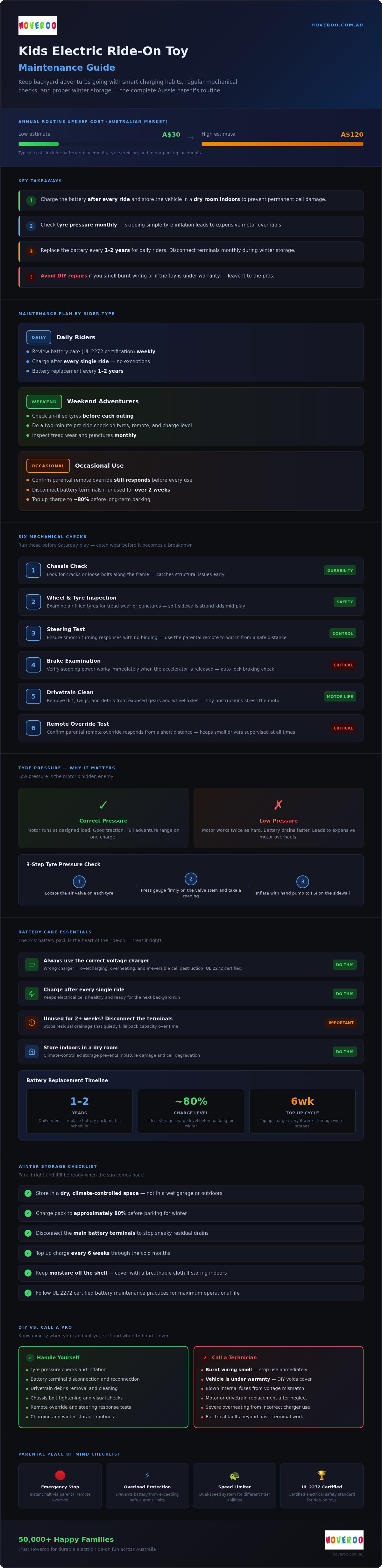
Key Takeaways: Maintain kids electric ride on toys by charging after every use, checking tyre pressure monthly, and storing the battery indoors to prevent permanent cell damage.
- Budget A$30 to A$120 annually for routine upkeep like battery replacements and tyre servicing.
- Avoid DIY repairs if you smell burnt wiring or if the toy is under warranty.
- Perform battery replacement every 1–2 years for daily riders and monthly terminal disconnections during winter storage.
- The article's cost table shows that skipping simple tyre inflation leads to expensive motor overhauls.
The decisions you face are clear: how hard your kids ride, which checks you handle at home, and when a technician should step in. Work through those choices below so you protect the vehicle, control spend, and keep backyard adventures on track.
Build a maintenance for kids electric ride on toys plan around real use
How often your kids ride should set the whole routine. Treat the backyard electric vehicle like a small car and it simply lasts longer under regular Australian use.
Three common situations, three concrete moves:
- Daily riders: review battery care (UL 2272 certification) weekly so total power holds up between charges.
- Weekend adventurers: check tyres with air (air-filled tyres) before each outing so soft sidewalls do not strand you mid-play.
- Occasional use: confirm the remote control (parental remote override) still responds before the next voyage so small drivers stay supervised.
You step into the sunshine, the kids want their favourite cruiser, and a two-minute pre-ride pass over tyres, remote, and charge level is what separates a clean run from a tow back to the shed. If your child rides daily, keep that weekly battery rhythm. For a deeper walk-through of the same habits, open the full care guide for 2026 and lock the routine in.
Charge right and you protect the battery pack
A charger that matches your vehicle voltage is the difference between a healthy pack and a ruined one. An incompatible charger risks overcharging, severe overheating, and irreversible cell destruction. Pairing the lead with battery care built around UL 2272 certification for electrical safety standards keeps backyard rides free of avoidable hazard. Mixing power leads the wrong way is like pouring high-octane fuel into a tiny mower engine: internal fuses blow at once.
Charge after every ride so the electrical cells stay healthy. Store the vehicle in a dry room between sessions. For pack-specific steps Aussie parents use year-round, follow the battery care walk-through and keep the toy ready for the next run.
Tip: Always disconnect the battery terminals if the vehicle is unused for over two weeks to stop residual drainage.
Six mechanical checks that catch wear before a breakdown
A short inspection pass turns “it felt odd yesterday” into a fix you make before Saturday play. Keep the stoke alive with this routine:
- Check the chassis: Look for cracks or loose bolts along the frame to maintain durability.
- Inspect the wheels: Examine tyres with air for tread wear or punctures.
- Test the steering: Ensure smooth turning responses without any binding.
- Examine the brakes: Verify that stopping power works immediately when released.
- Clean the drivetrain: Remove dirt and debris from exposed gears.
Tiny twigs wedged inside wheel axles quietly place extra stress on the motor, so clear those hidden crevices when you clean the drivetrain. Catching that early stops a stripped gear later. Use a remote control from a short distance while you test steering and brakes so you can watch responses without standing in the path. When you want gear built for local conditions, browse reliable kids ride-ons designed around Australian backyards. More on this: Australia's Kids Electric Ride-On Brand.
Set correct tyre pressure before the next backyard run
A low-pressure gauge and a couple of minutes are enough to keep outdoor fun safe and the motor unloaded.
During routine inspections, tyres with air often lose firmness quietly over time. Correct pressure cuts the chance of a sudden puncture mid-adventure.
First, locate the air valve on each tyre. Next, press your gauge firmly onto the valve stem to take a reading. Inflate carefully with a hand pump until the PSI matches the figure stamped on the sidewall. Low pressure is like riding a bicycle through deep beach sand: the motor works twice as hard for the same trip. Make the gauge part of your pre-ride habit and the kids get grip when they want outdoor birthday gift ideas out on the grass again.
Winter storage habits that protect power through the cold months
A dry, climate-controlled space is what preserves battery power over the cold months.
Direct client experience shows the arc clearly. One family’s powered ride-on sat through wet conditions and cell capacity fell away rapidly. Moving the same style of vehicle indoors, charging the pack to about eighty percent before parking, and disconnecting the main terminals stopped the sneaky drains. Topping up the charge every six weeks through winter then held the pack steady until warm weather returned. Follow battery maintenance practices tied to UL 2272 certification and you stretch operational life the same way.
Park under cover, keep moisture off the shell, and the ride-on is ready when the sun comes back. Over 50,000 happy families trust Hoveroo for durable electric fun across Australia, and that same storage discipline is what gets a Hoveroo unit through the off-season intact.
DIY tools that isolate faults without a full workshop
Most ride-on checks only need basic garage gear you may already own: a digital multimeter, wire strippers, and socket sets. When the ride fails to start, that kit shows whether a dead fuse, loose wiring, or a battery care issue under UL 2272 certification is the real culprit.
Workshop experience is consistent here. A fast volt check reveals whether power reaches the controller, so you stop guessing and start fixing the right joint. DIY servicing suits hands-on parents on fuses, connectors, and simple mechanical parts; professional workshops suit complex internal board work.
If the toy will not turn on and you assume you need a bench tech at once, read the simple fuse connections first. That single check saves a trip more often than you expect.
Leave burnt wiring and warranty work to the pros
Stop DIY the moment internal wiring is broken or an electrical component smells burnt.
Complex motor work is awkward to handle safely at home. The expert Sydney team sees damaged circuit boards arrive after mistaken home attempts, which is why major electrical faults belong with professional Australian technicians who keep a Hoveroo unit safe for the next backyard session. Step away from the toolbox as well if the ride-on is still under warranty: unauthorised tinkering can void coverage entirely.
When you feel unsure, reach out to local support and hand the job across before a small fault becomes a board replacement.
What Australian ride-on upkeep actually costs over a year
Long-term component costs in Australia vary with how you ride and what you replace. Routine upkeep is what keeps the vehicle safe for repeated backyard use, and battery care under UL 2272 certification is what stretches pack life between replacements.
| Maintenance Task | Frequency | Main Cost Driver |
|---|---|---|
| Battery Replacement | Every 1–2 years | Battery capacity and quality |
| Tyre Servicing | Bi-annually | Inflating tires with air (air-filled tires) |
| System Checks | Monthly | Wiring and remote control units |
Client work shows the same pattern: regular maintenance prevents expensive motor overhauls. Skip simple tyre inflation and the drive system takes the extra stress instead. For owners looking to maximise component life, high-tech metal and motor protection solutions like motorbull.com.br offer advanced ways to shield internal parts from friction. Treat preventive care the way you would a family car service and the annual figure stays nearer the A$30 to A$120 band than a sudden rebuild. Ask for a personalised quote when you want exact servicing figures for your model.
Family-scale models that let parents join the weekend ride
Family-scale models built for heavier weights let you join the backyard action rather than only supervising from the path. Workshop experience shows heavy-duty frames handle rough off-road terrain more cleanly during shared play, and a solid steel chassis protects internal motors from impact damage. A high-capacity ride-on is what turns a short kids’ loop into a proper weekend session for the whole crew.
Keep battery care under UL 2272 certification tight so the high-capacity motor stays safe across longer runs. Pneumatic tyres with air give smoother traction across bumpy grass and gravel. If you want full steering supervision, pick a model with a remote control and you guide the pace without ending the fun.
Frequently asked questions
How often should I charge my child’s electric ride‑on battery?
Charge the battery for kids electric ride on toys after every use, and at least once per month during storage. Battery care under UL 2272 certification is what supports a long service life on backyard runs, the same habit shared across 50,000+ happy families running this gear.
Can I use any charger for my electric ride‑on toy?
No. Use the original charger supplied with your electric ride‑on toy. An incorrect charger can ruin the power pack, so the matched lead is a safety rule, not a suggestion.
How do I store my child’s ride‑on toy during winter or long periods?
Store the toy indoors in a dry area after you charge the battery. Disconnect the terminal wires to limit gradual discharge, then refresh the charge on a monthly rhythm through the break so Australian kids can roll straight back into outdoor play.
What are the signs that the tyres need replacing or maintenance?
Inspect the wheels for visible cracking, deep punctures, or tread worn smooth. Moving up to sturdy tyres with air restores traction for off‑road fun when grip starts to fade, so schedule a check whenever the rubber looks tired.
How often should I clean my ride‑on toy?
Wipe the outer body after every messy dirt run. Keep high-pressure water away from sensitive electrical components so you tidy the shell without forcing moisture into the harness.
Keep Your Electric Ride-On Ready for Action in 2026
Sound maintenance for kids electric ride on toys is how your young drivers get safe backyard adventures without early pack or drivetrain wear.
The technical team at Hoveroo focuses on keeping Australian kids moving safely across the country. Follow battery care under UL 2272 certification, fit quality tyres with air for off-road traction, and use a remote control when you want eyes on every trip. Those three habits close the loop on the same decisions you met at the start: ride frequency, home checks, and knowing when to call a pro.
Ready to upgrade your child's ride? Explore electric models and accessories at Hoveroo Australia or contact the team for personalised advice.