
Kids Hoverboard with Bluetooth Speaker Australia: A Parent’s Guide
The best kids’ hoverboard isn’t necessarily the one with the loudest speaker. If you’re comparing a Kids hoverboard with Bluetooth speaker Australia families can enjoy, start with your child’s confidence and safety, then consider whether music would add to the fun.
A built-in Bluetooth speaker lets your child stream music while riding, adding a soundtrack to supervised play. The Hoveroo Hoverboard combines this feature with stated UL 2272 certification, giving you specific details to consider when comparing options. Certification matters, but it doesn’t replace a helmet, adult supervision or a suitable riding space.
What should you look for beyond the speaker? This guide covers what Bluetooth audio adds, which safety and suitability details deserve your attention, and how to use a parental peace of mind checklist. You’ll also learn how to consider maximum rider weight and your child’s comfort with balancing. Focus on choosing a board that makes outdoor play exciting while keeping supervised riding front of mind!
Key Takeaways
- A built-in Bluetooth speaker streams audio from a compatible device, adding music to your child’s ride.
- When comparing a Kids hoverboard with Bluetooth speaker Australia options, treat the speaker as an optional extra, not a measure of riding quality.
- Use your child’s age and experience to guide your choice, and compare them with the product’s guidance and maximum rider weight.
- Compare speaker-equipped and speaker-free boards according to your family’s preferences for entertainment and simplicity.
- The Hoveroo Hoverboard combines a built-in Bluetooth speaker with stated UL 2272 certification. Consider how those features fit your family’s needs.
What does a kids’ hoverboard with a Bluetooth speaker offer?
A kids’ hoverboard is a self-balancing ride-on that responds to the rider’s movements. Your child stands on the foot platforms and shifts their weight to move and turn. Add a built-in Bluetooth speaker and the board can also play audio streamed from a compatible device. One feature supports the ride; the other adds music.
The word “hoverboard” may bring science fiction to mind, but today’s boards are real, motorised ride-ons. For background on the history of hoverboards, Wikipedia covers the idea’s fictional origins and real-world development. For parents comparing a Kids hoverboard with Bluetooth speaker Australia retailers offer, the practical question is how that audio feature fits your family’s playtime.
Music can bring extra personality to a backyard session or supervised play. Your child can choose audio they enjoy while you keep your attention on the rider, surroundings and riding space. The speaker doesn’t make the board easier to ride or improve its performance, so consider product suitability, certification and safe riding habits separately.
How does a built-in Bluetooth speaker work on a hoverboard?
Pairing is straightforward: enable Bluetooth on a compatible device, select the hoverboard from the available devices and start playing audio. The sound streams through the board’s built-in speaker. Exact steps can vary by device, so follow the instructions supplied with the hoverboard and the device you’re pairing.
Treat the speaker as an entertainment feature, not a navigation or safety system. It won’t guide your child around obstacles or replace your attention as a supervising adult. Keep the audio low enough for your child to hear instructions and notice what’s happening nearby.
Why do kids enjoy music while riding?
Kids often love choosing what to listen to. A favourite song or playlist can make a supervised ride feel like their own little outdoor adventure. It’s a simple way to add choice to playtime, whether your child wants music for a short ride or a family turn-taking session.
Keep the volume low enough for clear communication. Your child should still be able to hear your directions and sounds in the immediate surroundings. Treat music as an optional extra, and let their readiness to ride, the product guidance and your supervision lead the way. Fun and sensible habits can go side by side!
Bluetooth fun and hoverboard safety: what should parents know?
Music can make a ride feel more personal, but it shouldn’t take your child’s attention away from you or their surroundings. Assess a Kids hoverboard with Bluetooth speaker Australia families are considering as a complete ride-on, not by its audio feature alone. Review the product’s stated certification and suitability guidance, then set clear expectations for supervised riding.
Certification provides useful information about a product, but it can’t guarantee a risk-free ride. Your child still needs protective gear, adult supervision and a suitable riding space away from traffic. Build those habits into every session, whether music is playing or not.
What does UL 2272 certification tell parents?
UL 2272 is a safety standard covering the electrical system of a personal self-balancing scooter, including its battery and charger. It addresses electrical-system risks, but doesn’t assess every aspect of riding or remove the need for care. Hoveroo states that its Hoveroo Hoverboard has UL 2272 certification. Treat this as one useful product detail, not a promise that every ride will be safe.
Before your child rides, help them become familiar with the board’s instructions and controls. Stay close and supervise, especially during practice. Choose a suitable, clear area away from traffic and give your child time to learn at their own pace. Certification and careful riding choices work together; neither replaces the other.
How can parents keep music from becoming a distraction?
Set a simple listening rule before the ride starts: keep the music low enough for your child to hear you and notice nearby sounds. Pause the audio when you need to give directions. Do the same while practising a new movement, so your child can focus on what you’re saying and how the board responds.
- Stay within earshot. Supervise the ride and make sure your child can hear your instructions.
- Pause for practice. Turn off the music while explaining controls or trying a new skill.
- Wear protective gear. Make a helmet and age-appropriate protective gear part of the routine. They’re sensible precautions, not a guarantee against injury.
- Keep the setting suitable. Pick a clear riding area away from traffic and follow the product’s instructions.
Make the speaker an optional layer of fun, not the focus of the ride. Before each session, check that your child is ready, can hear you and is wearing protective gear. If a board with audio suits your family, explore the Hoveroo Hoverboard alongside these safety habits.
Speaker-equipped vs speaker-free hoverboards: how do you compare them?
Start with your child, not the playlist. A speaker can add entertainment, but it doesn’t tell you whether a board suits the intended rider or how it rides. When comparing a Kids hoverboard with Bluetooth speaker Australia families might consider, weigh the audio feature against your child’s interests, the product guidance and your family’s preferences. A speaker-free option may suit you just as well if onboard music won’t add much to playtime.
| What to compare | Speaker-equipped board | Speaker-free board |
|---|---|---|
| Entertainment | Can play audio streamed from a compatible device through its built-in Bluetooth speaker. | Doesn’t offer onboard Bluetooth audio as part of the ride. |
| Simplicity | Includes an audio feature to manage alongside riding and supervision. | Leaves onboard audio out of the experience. |
| Family preference | May appeal if your child enjoys choosing music during supervised outdoor play. | May suit a family that prefers a more straightforward ride without music from the board. |
| Riding quality | A speaker is an entertainment feature, not a measure of riding quality. | The absence of a speaker doesn’t tell you whether the board suits your child. |
When is a Bluetooth speaker a worthwhile feature?
Think about how your child likes to play. If they enjoy picking songs for a supervised backyard session, onboard audio may be a welcome extra. You’ll also need to keep the music low enough for your child to hear instructions and nearby sounds. If that’s easy to manage, the speaker may fit your family’s routine. It remains a preference, not a riding aid.
When might a simpler hoverboard suit your family?
If music isn’t part of your child’s play, a speaker-free board may be a natural fit. Focus instead on whether the intended rider matches the product’s guidance, including its age recommendations and maximum rider weight. These are separate checks: age guidance relates to suitability, while the weight limit is a product-specific boundary. Then consider the other details that matter to your family.
Keep the comparison grounded in information you can use. Don’t assume a speaker-equipped board is better suited to a child, or that a speaker-free board is simpler to ride. Review each board’s product information and weigh it against the rider and how your family plans to use it. The audio feature doesn’t replace those checks.
If the riding surface is part of your decision, the guide Off-Road vs Regular Hoverboards: 2026 Australian Guide can help you consider board type separately from onboard audio. First consider the child and intended use, then decide whether music would make the ride more enjoyable for your family!
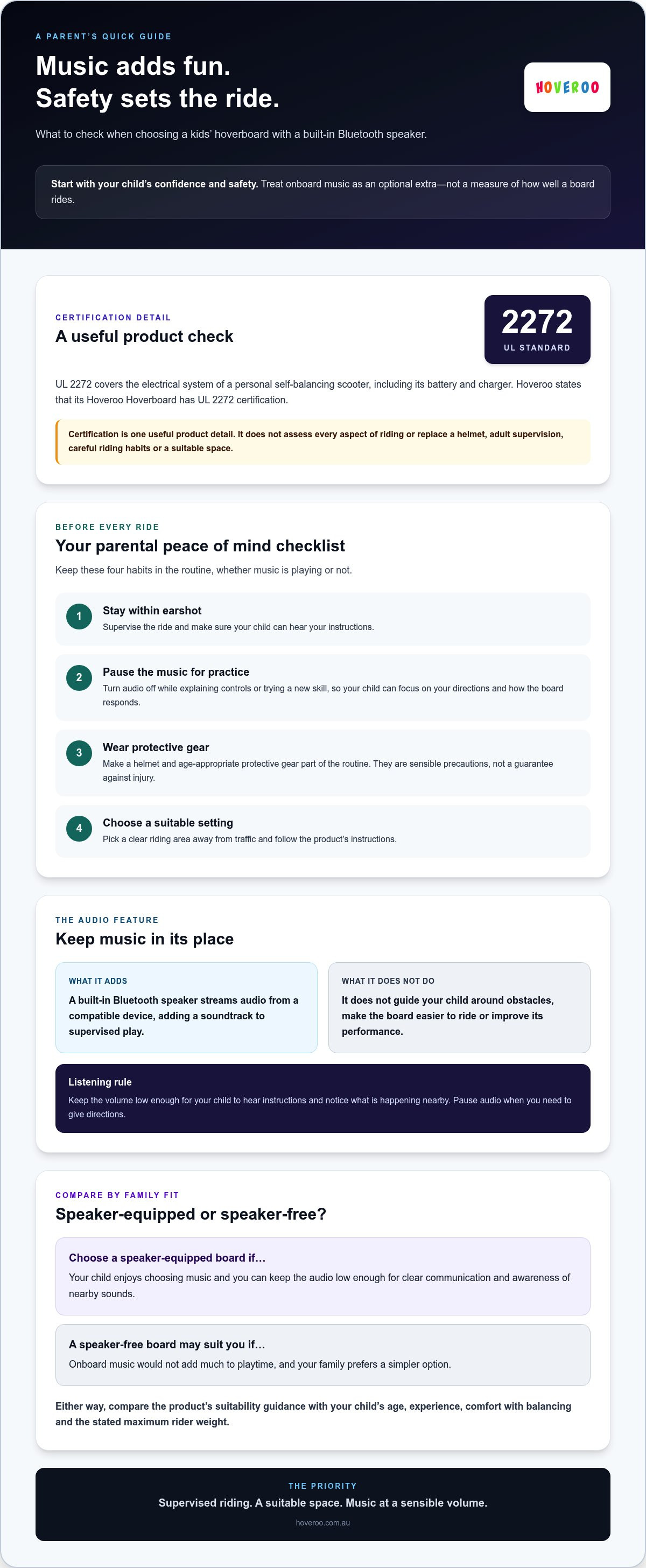
Use this parent checklist to choose a kids’ Bluetooth hoverboard
A good choice starts with the child, then moves on to product guidance, safety and the extras your family will actually use. A fun feature matters most once the board is a suitable fit and you’ve planned for supervised riding. Use this checklist to compare a Kids hoverboard with Bluetooth speaker Australia families might consider without getting lost in technical details.
Work through the checklist in order
- Start with your child. Think about their balance experience and how comfortable they feel trying a self-balancing ride-on. A child who’s new to the activity may need more time and close adult support during practice. Let their readiness guide your decision rather than assuming every child of a particular age will feel the same.
- Read the rider guidance. Compare the product’s stated age guidance with your child’s age, then review the manufacturer’s instructions. Treat age as one suitability point, not a guarantee that a board is right for every child.
- Check the maximum rider weight. Make sure your child is within the product’s stated maximum rider weight. This is separate from age guidance and should be assessed against the specific board, not a general rule for all hoverboards.
- Review certification and safety information. Read the board’s product details and note any stated certification, such as UL 2272 on the Hoveroo Hoverboard. Certification is one part of your decision. It doesn’t replace supervision, protective gear or safe riding choices.
- Plan protective gear and supervision. Make helmet use and age-appropriate protective gear part of the routine. For early rides, stay nearby, follow the product instructions and choose a suitable space where your child can practise under your watch.
- Set a speaker plan. Decide whether music will add to your child’s play. If you choose a built-in Bluetooth speaker, agree on a listening level that lets your child hear instructions and notice the surroundings. Pause audio for directions or practice.
- Finish with your family’s preferred features. Once rider suitability and safety are covered, weigh entertainment and other product details against what matters to your family. A speaker can be a fun extra, but it isn’t a measure of riding quality or suitability.
This order keeps the decision grounded: child first, product guidance next, then safety habits and preferred extras. Use it as your parental peace of mind checklist while comparing options. You’ll have a clearer sense of what matters for your child and what’s simply a nice-to-have.
Ready to compare a board with audio against your checklist? Explore the Hoveroo Hoverboard and consider its stated features alongside your child’s needs.
Meet the Hoveroo Hoverboard: music, movement and parent reassurance
Ready to turn your comparison into a practical choice? The Hoveroo Hoverboard is a children’s option with a built-in Bluetooth speaker, so your child can stream audio from a compatible device while riding. The product page also states UL 2272 certification. Consider these details alongside your child’s suitability for the board and your plans for supervised use.
For families weighing up a Kids hoverboard with Bluetooth speaker Australia retailers offer, music can add a personal touch to outdoor play. Choose features that suit your child and your family’s routine. Keep supervision, protective gear and the riding environment central to every session, with the speaker as an optional extra rather than the focus.
What makes the Hoveroo Hoverboard appealing to families?
The built-in Bluetooth speaker gives your child the option to choose audio for a supervised ride. It’s an entertainment feature, not a riding aid or a measure of suitability. Hoveroo also states that the board has UL 2272 certification. Consider that product information as part of your decision, while keeping attentive supervision and safe riding choices in your family’s plan.
Think about how the board could fit into your child’s outdoor play. They might enjoy choosing music for a supervised session, or your family might prefer to ride without audio. Either way, focus on the rider’s needs and the product’s stated information. A thoughtful choice leaves room for fun while keeping your parent-led approach front and centre.
Where can parents explore more hoverboard guidance?
If you’d like more context as you compare options, the guide How to Buy a Hoverboard Online in Australia: The 2026 Parent’s Resource offers another perspective on the buying process. If the riding surface influences your decision, Off-Road vs Regular Hoverboards: 2026 Australian Guide can help you consider terrain separately from the speaker feature.
As you explore, keep your priorities in view. Review the product’s stated rider guidance and maximum rider weight, plan for supervised use, and decide whether onboard music suits your family. That way, the features you choose support a decision centred on the rider.
Ready to take a closer look? Explore Hoveroo hoverboards and consider an option for your family’s next outdoor adventure. A little planning can help make that first ride a moment to enjoy together!
Make the next ride a family moment
The right choice is one that fits your child and the way your family likes to spend time outdoors. Before deciding, talk about what your child is excited about and what you want from the experience. That conversation can turn a product comparison into a shared decision, with clear expectations from the start.
As you consider a Kids hoverboard with Bluetooth speaker Australia families can enjoy, keep your child’s needs at the centre. Think about how the board will fit into your family’s routine, where outdoor play will happen and how you’ll make time for supervised practice. There’s no need to choose based on one extra feature alone. Weigh what feels right for your household.
Ready for a closer look? Explore Hoveroo hoverboards and consider an option for your family’s next outdoor adventure. A little planning can help make that first ride an exciting moment you share. Here’s to fresh air, new experiences and plenty of family fun ahead!
Frequently Asked Questions
Is a kids’ hoverboard with a Bluetooth speaker safe?
It can be part of supervised play when the board suits the child and you follow its instructions, but no feature makes riding risk-free. Before a session, check the riding area for obstacles, give your child your full attention and make sure they’re wearing a helmet and suitable protective gear. For a Kids hoverboard with Bluetooth speaker Australia families are considering, treat audio as an extra, not a safety feature.
Can kids listen to music while riding a hoverboard?
Yes, but set a clear listening routine. Keep the audio low enough for your child to hear you, and have them stop before you give directions or discuss something important. For example, pause the music before practising a turn or explaining where to ride. If your child can’t follow instructions while listening, switch the speaker off during that session.
What does UL 2272 certification mean for a hoverboard?
UL 2272 relates to the electrical system of a self-balancing scooter, including its battery and charger. It gives you specific certification information to consider, rather than a guarantee about every part of riding. Read the product details alongside the board’s instructions, and use the charger supplied or specified for that product. Hoveroo states UL 2272 certification for its Hoveroo Hoverboard.
How do I choose the right hoverboard for my child?
Start with the manufacturer’s rider guidance, then consider your child’s age, balance experience and comfort with supervised practice. Check that their weight is within the board’s stated maximum rider weight. For a first ride, choose a clear, open area on private property and stay close as they get used to the controls. Don’t rely on a single age or weight rule for every board.
Does a Bluetooth speaker affect hoverboard performance?
A Bluetooth speaker is an audio feature, not an indicator of how a hoverboard rides. Don’t use the presence of a speaker to judge speed, balance or riding performance. Compare the board’s stated rider guidance and other product details separately, and follow its instructions for pairing and use.
What should my child wear when riding a hoverboard?
Your child should wear a properly fitted helmet and age-appropriate protective gear for the ride. Choose clothing that allows comfortable movement and footwear that stays secure on their feet. Before setting off, check that straps are fastened and nothing is loose or likely to catch. Protective gear is a sensible precaution, not a promise that injuries cannot happen, so keep supervising.
Can a kids’ hoverboard with a Bluetooth speaker be used outdoors?
Outdoor use should be on a suitable private property area, following the product’s instructions and keeping your child away from traffic. Hoverboard rules for roads, footpaths and other public areas vary across Australia, and public use is restricted in most jurisdictions. Don’t assume e-scooter rules apply to hoverboards. Check current guidance for your state or territory before considering any public-area use.