
SpeedDrift Go Kart Battery Life in Australia: How Long It Runs
The ride time isn’t decided by the clock alone. SpeedDrift go kart battery life in Australia depends on how the kart is driven, the surface it’s used on and the conditions during the ride. That means a gentle cruise and repeated bursts of speed can use battery power differently.
It’s natural to want to know how long a ride will last before planning an outing. This guide explains what affects battery life and how to plan charging and play with greater confidence.
We’ll cover riding style, terrain, rider load and battery care, with practical ways to make each ride count. Ready to plan the next spin? Let’s get moving!
Key Takeaways
- Ride time depends on factors such as riding style, surface and rider load, so plan around how the kart will actually be used.
- Smoother surfaces and steady riding can help conserve battery power compared with frequent hard acceleration and drifting.
- Follow the charging and care instructions supplied with the kart to look after its battery between rides.
- Consider the Hoveroo Hoverboard if you’re weighing up another way to add outdoor ride-on fun.
SpeedDrift go kart battery life Australia
There isn’t one ride-time figure that fits every outing. Battery use changes with the way a child drives, the surface under the kart, the rider’s load and the conditions during play. A gentle lap on smooth, level ground draws power differently from repeated acceleration and drifting across a rough surface.
The model name includes “24V”, which identifies the battery’s voltage, not how many hours a charge will last. Voltage alone can’t tell you the kart’s usable battery capacity or predict its runtime. For a practical estimate, use the product’s stated ride-time information and factor in the conditions where your child will ride.
Think of advertised ride time as a guide to a particular set of conditions, not a promise for every session. A child who spends the outing accelerating, turning sharply and stopping often may use charge differently from one cruising steadily. An Australian backyard with short, repeated runs can create a different pattern from one continuous ride on even ground.
What changes ride time?
Four everyday factors help explain why battery life can vary from one charge to the next:
- Driving style: Frequent acceleration and drifting demand more from the motor than steady cruising. For example, repeated bursts across a driveway can use charge faster than a smooth circuit.
- Surface: Grass, uneven ground and slopes create more resistance than a firm, level surface. A kart working harder to move may draw more battery power.
- Rider load: The rider’s weight affects the effort needed to move the kart. Keep within the product’s stated maximum rider weight, and avoid adding extra loads.
- Conditions: Hot Australian afternoons and cool mornings can create different riding conditions. Store and charge the kart as directed in its instructions, rather than leaving it exposed between sessions.
These factors can combine. For example, a heavier rider making repeated turns on grass may have a shorter session than a lighter rider cruising on smooth paving. This illustrates how conditions affect battery use, not a guaranteed runtime comparison.
Plan a session around the battery
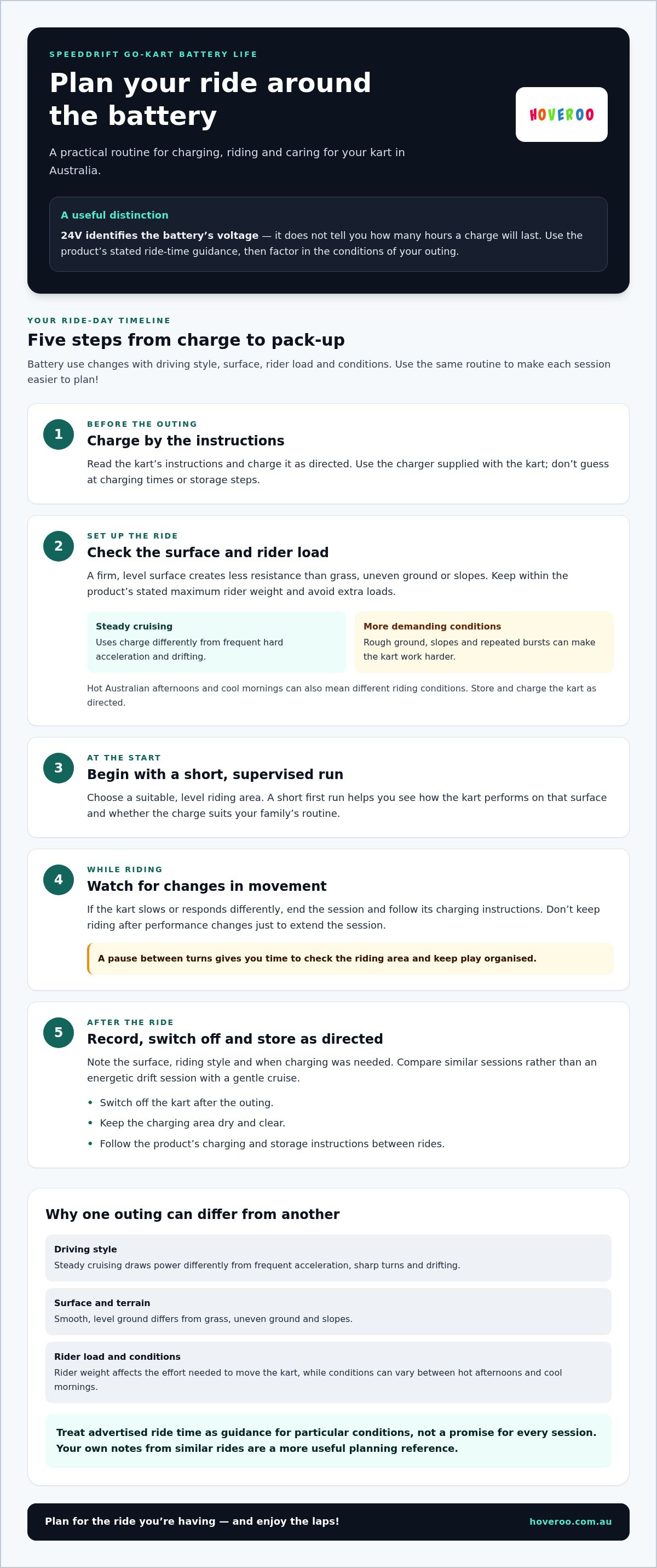
Use a simple routine to manage charging and play. Read the kart’s instructions, then charge it as directed before the outing. Choose a suitable, level riding area and begin with a short, supervised run. This helps you see how the kart performs on that surface and whether its charge suits your family’s routine.
During the ride, watch for changes in movement. If the kart slows or responds differently, end the session and follow its charging instructions. Don’t continue riding after performance changes just to extend the session. A short pause between turns also gives you time to check the riding area and keep play organised.
Keep a simple record of your outings, noting the surface, riding style and when charging was needed. Comparing similar sessions is more useful than comparing an energetic drift session with a gentle cruise. Your own notes can help you plan future rides without treating one outing as a universal battery-life result.
Care between rides
After each outing, switch off the kart and follow its charging and storage instructions. Keep the charging area dry and clear, and use the charger supplied for the kart. Don’t guess at charging times or storage steps: the product instructions are the guide to battery care.
For a realistic expectation of SpeedDrift go kart battery life in Australia, consider the kart’s stated guidance alongside your child’s riding style, the terrain and rider load. A steady session and a high-energy drift session use charge differently. Planning for those differences helps you enjoy the ride and know when to recharge.
Hoveroo: Hoveroo Hoverboard
If your child wants to try a different kind of ride, Hoveroo’s hoverboards offer an alternative to kart-style drifting. They won’t change how long a go-kart runs on a charge, but they provide another way to enjoy active play. Consider whether your child prefers steering a kart around a course or trying a hoverboard.
If you’re comparing options for outdoor adventures, Hoveroo also offers the Off-Road Hoverboard, Thunderbolt Electric Dirt Bike and Voltrix TerrainMaster 24V 4x4 Ride On. Choose based on the style of play that suits your family, and read each product’s details before deciding. For help exploring Hoveroo’s ride-on options, contact Hoveroo.
Plan your next ride with confidence
Plan an outing with time for play and a calm finish before heading inside. A little preparation can help the ride fit naturally into your family’s day. Keep the kart’s care instructions handy for the next round of laps.
For guidance on SpeedDrift go-kart battery life in Australia, ask Hoveroo about kart battery life. Here’s to fresh-air fun and more happy moments outdoors!