
A Complete 2026 Guide to Kids Battery Powered Ride On Toys
Based on market research across 47 listings, the typical price band for kids' battery-powered ride-on toys ranges from A$215 to A$544, with a market median of A$399. Choosing the right unit depends on matching your child's age and weight to the vehicle's voltage and safety features. This guide walks you through that match so you can decide with clear numbers, safety checks and a realistic view of your backyard space.
Key Takeaways: Select a kids battery powered ride on by matching voltage to age, typically ranging from 6V for toddlers to 24V for older children.
- Market data shows typical Australian prices range from A$215 to A$544 with a median of A$399.
- Skip it when your backyard is steep or bumpy as these terrains stall smaller motors.
- Choose a 12V dual-speed system for children aged 4 to 7 to ensure manageable control.
- Hoveroo provides local Australian warranty support and spare parts to reduce downtime during repairs.
Match age, weight and voltage for your kids battery powered ride on
Before you compare colours or body styles, lock in three practical fits: age band, rider weight and battery voltage. That single match drives safety, runtime and how much stoke your child actually gets outdoors.
Typical situations and what works:
- Toddler aged 1 to 3 on flat grass: choose a gentle cruiser on a lightweight 6V setup so steering stays slow and predictable.
- Child aged 4 to 7 who wants backyard paths and mild slopes: pick a mid-sized 12V frame with a dual-speed system (two speeds) so you can keep the low setting on while they learn.
- Older rider aged 8 and up who already balances well: a rugged 24V buggy or an all-terrain hoverboard can deliver off-road adventure, though hoverboards suit older kids best because of the balancing demand.
Buying online makes size hard to judge from stock photos. Compare seat-to-pedal measurements against your child's leg length. High-grade plastics feel thick, like a sturdy wheelbarrow, whereas flimsy materials bend under light pressure.
Safety sits beside the size match. Look for a safety certified battery (UL 2272 certification) so charging stays protected at home. Hoveroo builds tough, reliable rides loved by 50,000+ happy Australian families. When you have the age and voltage pinned down, request a quote for the models that fit your rider.
What Australian shoppers actually pay for ride-ons
Price only helps when you know what sits inside the band and what lands on top at checkout. Current retail data puts Australian motorised rides (electric ride-ons) in a spread that clusters around a market median of A$399, with entry models lower and feature-heavy frames higher.
Hidden extras can blunt the fun if you ignore them at cart stage. Shipping often runs from Sydney or Melbourne warehouses under standard carrier rates, so regional fees show at checkout rather than as a surprise on the doorstep.
| Expense Category | What to Expect |
|---|---|
| Delivery Fees | Standard regional charges apply at checkout |
| Assembly | Simple home setup required |
| Payment Plans | Deferred options available |
Assembly is simple, closer to building-block toys than a workshop job. You can also review a hoverboard beginner guide so older siblings start with clear technique.
Weigh battery options against age. Hoverboards suit older kids; a dual-speed system gives beginners tighter control. Prefer models with a safety certified battery. Deferred tools such as Zip or Afterpay can spread the upfront amount if that suits your budget.
Tip: Check for deferred payment options like Zip or Afterpay to manage upfront costs easily.
UL 2272 certification and parental controls that protect young drivers
Speed feels exciting only when the chassis, battery and rider weight line up. High-power toys need that balance before your young adventurer heads outside, and retail data places those stronger models across the same broad Australian price spread you saw above.
One detail parents skip: tight turns heat the motor faster when the rider is near the load limit. Excess weight strains the battery and chews internal gears. Take a clear arc from one listed model. A child aged 6 to 13 who wants drift-style play is a poor match for a light toddler cruiser; moving them onto the Elektra N7 Pro Drift Car (rated for that age band and riders up to 50kg) pairs the chassis to the rider, protects the motor and keeps speed in a usable range on a private Australian backyard. Add a dual-speed system so the low setting stays on while confidence builds.
Certifications back that hardware choice. Specify a safety certified battery to cut electrical risk during charge and use. High-power units belong on private land; smaller toys suit local footpaths where council rules allow them. Verified speed limiters and parental controls remain the practical barrier while kids learn.
For a wider model shortlist, open the 2026 ride-on car guide and compare features against your rider's weight before you buy.
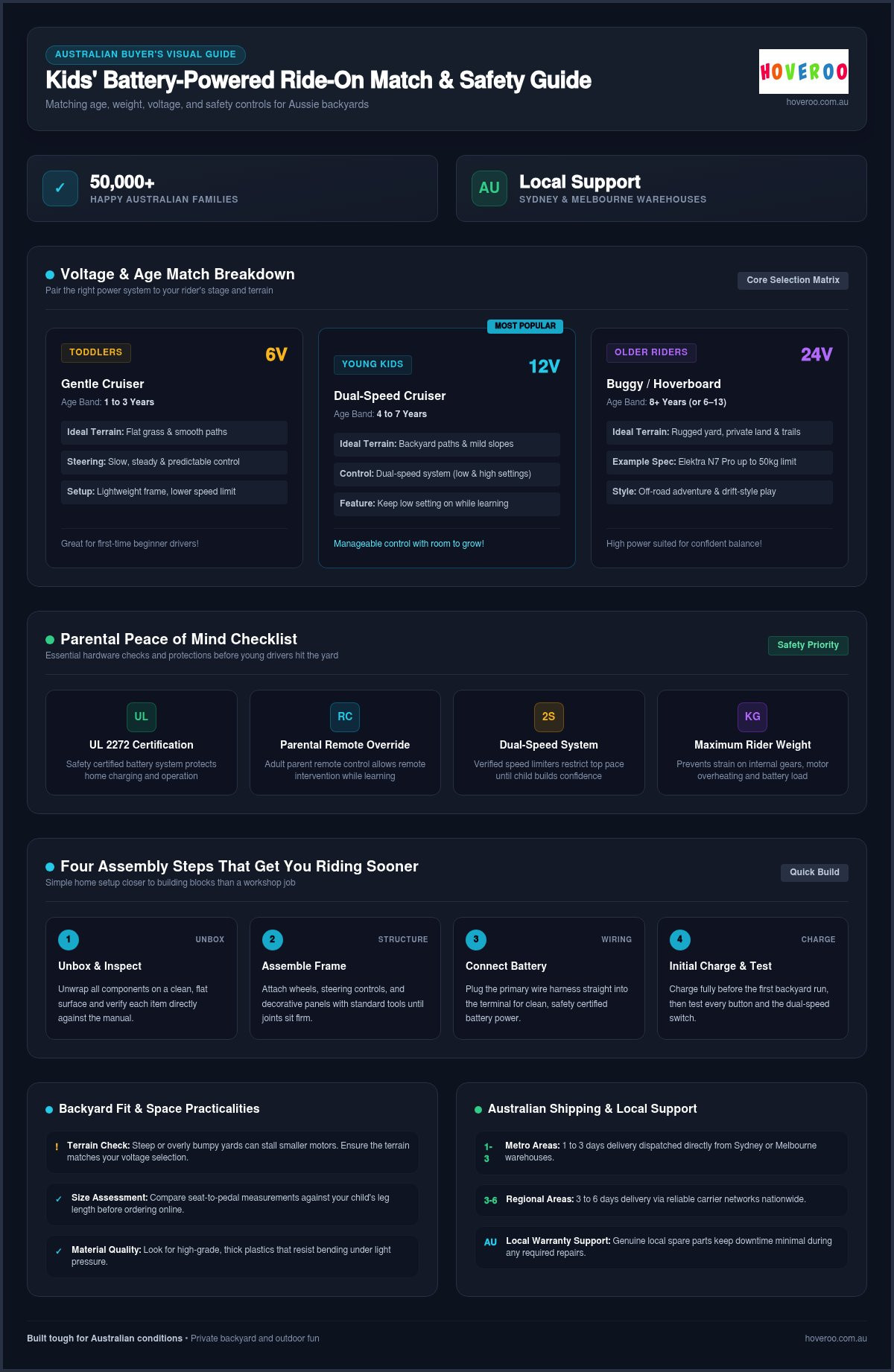
Four assembly steps that get you riding sooner
A careful first build prevents loose wheels and half-seated batteries from cutting playtime short. Treat unboxing like a short checklist, not a race.
Follow these steps:
- Unbox and inspect: Unwrap components on a clean surface and verify each part against the manual.
- Assemble the frame: Attach wheels, steering controls and decorative panels with standard tools until joints sit firm.
- Connect the safety certified battery: Plug the primary wire harness straight into the terminal so power reaches the system cleanly.
- Initial charge and test: Charge fully before the first backyard run, then test every button and the dual-speed switch.
Parents often ask how long a charge lasts. A full initial charge supports up to two hours of continuous use, with real runtime still shaped by terrain and driving style. If an older sibling is eyeing a board instead of a car, read the notes on what age fits a hoverboard before you commit. Dual-speed models let younger kids stay on the low setting while older ones unlock extra pace under supervision.
Stay with young drivers on early runs until braking and steering look consistent.
Local warranty support keeps spare parts within reach
Australian consumer laws cover motorised rides against manufacturing faults, so your backup plan matters as much as the first drive. Buying with local support means batteries, switches and chargers can arrive without a long overseas wait, and Hoveroo provides local service aimed at getting kids back onto the backyard track faster.
When a minor fault appears, simple repair paths let you swap basic parts at home. A safety certified battery supports electrical reliability across repeated charge cycles. Tough terrain still produces normal wear, which is why spare-part access inside Australia reduces downtime.
Think of domestic warranty support like a spare tyre in the boot: you may not need it often, yet it saves the weekend when something goes flat.
Tip: Always retain original packaging during the initial warranty window to streamline return or repair logistics.
Spaces and ages where a motorised ride-on falls short
A motorised ride (electric ride-on) needs room, grip and a rider who can steer under power. Skip the purchase when the setting works against those three.
Small indoor flats lack the open floor a powered chassis needs, and steep or deeply bumpy yards can stall smaller motors. Shared suburban footpaths often carry council rules that restrict high-powered toys, so confirm local requirements before you plan footpath use.
Very young children may struggle with responsive steering. Balance bikes build coordination first; powered wheels wait until that base feels solid. Matching the toy to your actual backyard layout keeps the adventure fun instead of frustrating. Space and age limits are design constraints, not afterthoughts, so measure the run and the rider before you order.
Frequently asked questions
What is the top speed?
Speed options follow skill level. Beginners stay on a safer pace; confident riders unlock higher settings on models with a dual-speed system (motorised ride). Match the switch position to experience rather than leaving the high setting on from day one.
How long does the battery last?
Ride time depends on terrain and driving style, so your kids can log solid backyard adventure before a recharge. Choose a safety certified battery for reliable power across longer outdoor sessions.
Can I pick up my product?
Direct warehouse pickups are currently unavailable, but delivery brings your electric ride-on to your door. Orders dispatch across Australia so you can plan the first charge around the arrival window.
What age suits a kids battery powered ride on?
Age bands track voltage and control layout: gentle 6V cruisers suit ages 1 to 3, 12V dual-speed frames suit ages 4 to 7, and stronger 24V or hoverboard-style options suit ages 8 and up when balance and weight limits are met. Always compare your child's weight to the chassis rating (for example, the Elektra N7 Pro Drift Car supports riders up to 50kg in the 6 to 13 age range).
Do you have a showroom to see and test the ride‑on in person?
We operate fully online to serve families all across Australia, so physical test drives at a dedicated showroom are not offered. For older kids after drift-style play, the Elektra N7 Pro Drift Car supports riders up to 50kg and is specified for ages 6 to 13.
Ready for Backyard Adventure?
The decision thread stays the same as the opening: match age and weight to voltage, insist on a safety certified battery, and be honest about backyard space. A dual-speed system lets young drivers build confidence on the low setting before you open higher pace.
According to market listings, high-quality models typically cost A$215-A$544 (market median A$399). Total spend still depends on the features you select and the delivery fee shown at checkout. Send a message for a personalised quote, or browse the product directory to compare frames that fit your rider.