




















Hoverboard Battery Life: How Long It Lasts Per Charge and Overall
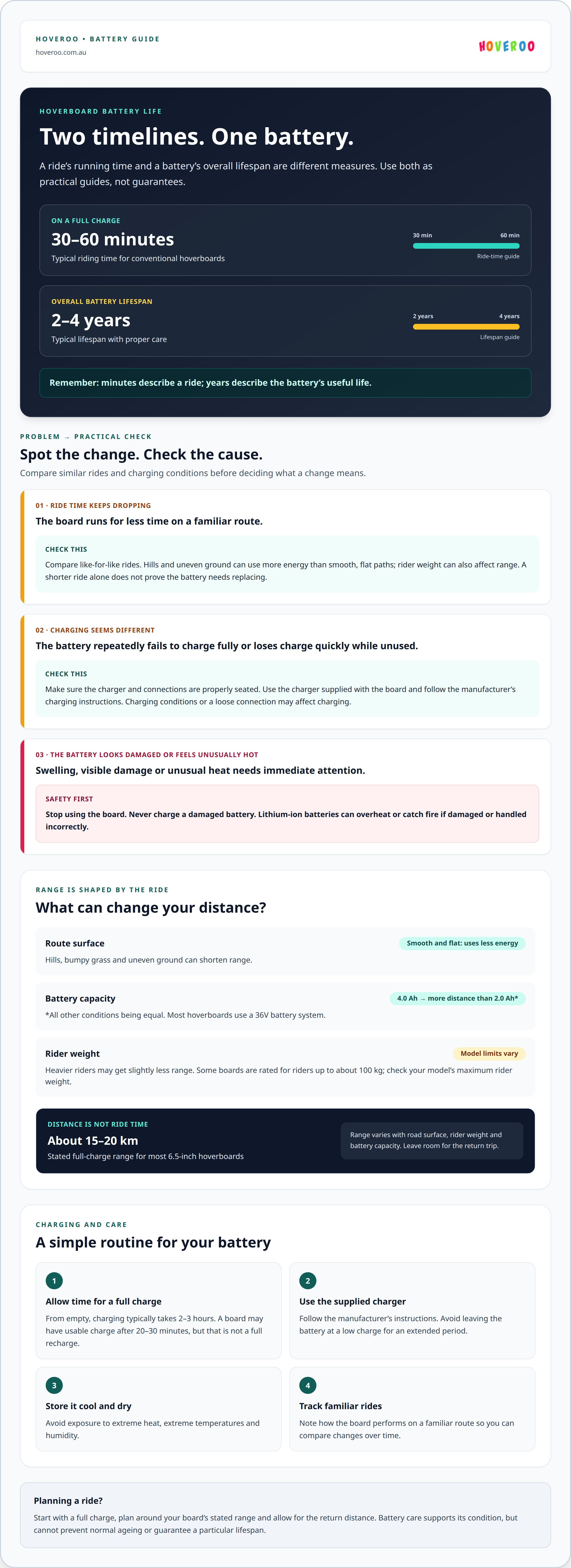
A hoverboard battery has two timelines: how long it powers a ride, and how long it stays useful overall. For realistic hoverboard battery life expectations, most conventional models offer around 30 to 60 minutes of riding on a full charge, while the battery typically lasts 2 to 4 years with proper care.
That’s a useful starting point, but ride time can vary with the rider’s weight and the surface. Smooth, flat paths use less energy; hills and uneven ground can drain the battery faster. A shorter ride doesn’t necessarily mean the battery is ready to recharge.
Want to keep the fun rolling and spot battery trouble early? This guide covers what affects a charge, how to care for the battery and which changes may signal a problem. You’ll also learn what influences battery lifespan, so you can plan rides and recognise when the battery may need attention.
Key Takeaways
- Plan for around 30 to 60 minutes of riding on a full charge, with terrain and rider weight affecting how far you go.
- Learn which changes in charging or ride time can point to a battery that needs attention.
- Good battery care can help support a typical lifespan of 2 to 4 years.
- See how riding conditions and hoverboard choice can shape your family’s outdoor adventures.
How long do hoverboard batteries last on a single charge?
Most 6.5-inch hoverboards state a full-charge range of about 15-20 km. Road surface, rider weight and battery capacity can change how far your ride goes.
Road conditions and range
Road conditions affect how much energy a hoverboard uses to move. Smooth, flat paths help the battery work efficiently, while hills and uneven ground can shorten range. For example, a ride across level pavement may use less power than the same distance over bumpy grass. In Australia, choose a route that suits your board and leaves room for the return trip.
Factors shaping battery range
Battery range depends on the battery, the route and the conditions during your ride. A 4.0 Ah battery usually provides more distance than a 2.0 Ah battery, all other conditions being equal. Hoverboards commonly use lithium-ion batteries, and most use a 36V battery system. Extreme temperatures and humidity can affect battery performance, so avoid exposing the battery to those conditions.
Rider weight and range
Rider weight can affect energy use, with heavier riders potentially getting slightly less range than lighter riders. Some hoverboards are rated for riders weighing up to about 100 kg, but that figure varies by model. Staying within the model’s maximum rider weight helps you ride within its stated limit. A heavier rider on a hilly route may use more energy than a lighter rider on flat ground.
Lithium-ion batteries can overheat or catch fire if damaged or handled incorrectly. Use the charger supplied with the board, keep the battery away from extreme heat and humidity, and stop using it if you notice damage or unusual heat. Never charge a damaged battery.
Signs a battery may need replacing
A noticeable drop in ride time can be a warning sign. Compare similar rides rather than judging from one trip: a flat path and a hilly route put different demands on the battery. If the board repeatedly runs for less time on the same route, the battery may not be holding its charge as well.
Pay attention to charging, too. A battery that repeatedly fails to charge fully or loses charge quickly while the board is unused needs attention. Before blaming the battery, check that the charger and connections are properly seated. A loose connection or unsuitable charging conditions can also affect charging.
- Ride time keeps dropping on familiar routes.
- The board stops running earlier than it used to.
- The battery loses charge quickly between rides.
- The battery casing looks swollen or damaged, or feels unusually hot.
These signs can help you decide when to stop riding and assess the board. Stop using it if the battery is swollen or damaged, or becomes unusually hot. Don’t keep charging a battery that appears damaged. Reduced range alone doesn’t prove it needs replacing: terrain, rider weight and temperature can also affect performance.
If the battery needs replacing, the replacement must match the hoverboard’s model and specifications. Choose one from a reputable source or the board’s manufacturer. A different voltage or connector may not suit your board, so match the replacement to the manufacturer’s requirements rather than choosing by appearance.
Check that any replacement battery is compatible with your board and sourced from a reputable supplier or the manufacturer. Compare the board’s current performance with how it worked before. This can help distinguish a battery issue from a change in route or charging habits.
Typical hoverboard riding time per charge
Most conventional hoverboards provide approximately 30 to 60 minutes of riding on a full charge. That describes riding time, while a range figure describes distance. Use both as planning guides, not a promise for every outing. A shorter loop can help you get familiar with your board’s performance before choosing a longer trip. Keep enough charge in mind for the return journey.
Charging a hoverboard from empty typically takes 2-3 hours. A board may have usable charge after 20-30 minutes on the charger, but that’s not the same as a full recharge. For a longer outing, allow time for a full charge and follow the instructions supplied with your model. Don’t assume a brief top-up will suit every planned ride.
A steady charging routine can help when the board is used regularly. Avoid leaving the battery at a low charge for an extended period, and store the hoverboard in a cool, dry place when it’s not in use. Note how the board performs on familiar outings so you can compare its range over time.
Follow the manufacturer’s charging instructions and use the supplied charger. If transporting the battery, check the carrier’s conditions for lithium batteries. For disposal, ask your local council or waste service about battery collection options. These are practical checks, not a claim that one set of rules applies across Australia.
Plan rides around the board’s stated range and your intended route. Allow for the return distance when choosing a destination. Starting with a full charge and using a familiar route can help you understand the board’s performance. If its usual ride time changes, note the difference so you can compare.
Expected battery lifespan
Hoverboard batteries typically last 2 to 4 years with proper care. That’s the battery’s overall lifespan, not its riding time per charge. Treat this range as a guide rather than a fixed expiry date. A board may still work beyond that point, while its battery gradually holds less charge and supports shorter outings.
Battery performance depends on more than how often the board is used. Charging habits, storage, and exposure to extreme temperatures or humidity can all have an effect. Leaving a hoverboard unused for a long time with very little charge may affect the battery’s condition. Store it in a cool, dry place between family adventures.
Make battery care part of your routine. Follow the manufacturer’s charging instructions, avoid leaving the battery at low charge for an extended period, and store the board somewhere cool and dry when it’s not being ridden. These habits support battery care, but they can’t prevent normal ageing or guarantee a particular lifespan.
To judge changes over time, compare rides under similar conditions. A familiar route is a better comparison than switching from flat pavement to steep, uneven ground. Note changes in the board’s usual ride time and consider whether the rider or route has changed. This helps separate a lasting shift from different conditions on the day.
The key takeaway for hoverboard battery life expectations is to weigh age and performance together. As the battery approaches the typical 2 to 4-year lifespan, pay closer attention to repeated changes on comparable rides. Follow the maker’s guidance, and stop using the board if the battery shows damage or unusual heat. That keeps your next decision grounded in how the battery is actually behaving.
Hoveroo
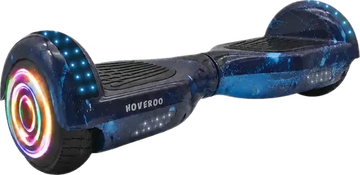
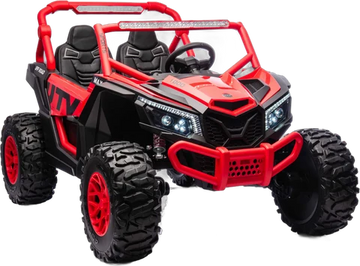
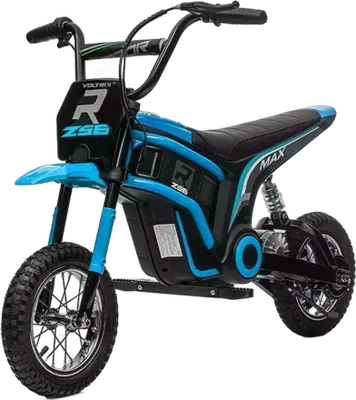
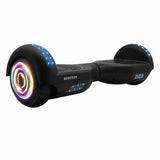
Hoveroo offers hoverboards and other electric ride-ons for Australian families planning outdoor play. If you’re weighing up battery lifespan alongside where and how your child will ride, start with the kind of terrain and activity that suits your family. The Hoveroo Hoverboard and Off-Road Hoverboard offer two hoverboard options to consider, while the Thunderbolt Electric Dirt Bike and Voltrix TerrainMaster 24V 4x4 Ride On provide different ways to ride.
Battery care matters for ride-ons, too. Follow the product instructions for charging and storage, and watch for changes in ride time as the battery ages. This gives you a practical way to consider your family’s riding needs when choosing a product.
For help deciding which ride-on suits your family, contact Hoveroo.
Make your next ride a confident one
Your hoverboard battery life expectations are most useful when they help you plan rides your family can enjoy. Think beyond the first outing: consider who will ride, where the board will be used and how it fits into your family’s play routine. That makes choosing a hoverboard part of a bigger plan for outdoor fun, not just a battery estimate.
As children grow more independent, planning rides together can help everyone feel prepared. Talk about where to ride, what to bring and what would make an outing enjoyable for the whole family. A little planning can turn the next ride into a fun chance to explore together.
Ready to make a confident choice for your family’s next ride? Ask Hoveroo about your battery questions and take the next step towards outdoor play that suits your plans. Pick a path, get ready to roll, and make room for more adventures!
Frequently Asked Questions
What is the expected lifespan of a hoverboard battery?
A hoverboard battery typically lasts 2 to 4 years with proper care. The battery may age differently from the hoverboard itself, so note when the board was first used. If you’re buying a second-hand board, its age can help you judge how much battery life may remain. Use the model’s instructions as your guide for ongoing care.
How long does a hoverboard battery last per charge in Australia?
Most conventional hoverboards provide approximately 30 to 60 minutes of riding on a full charge. This gives you a broad idea of session length, rather than a fixed time for every outing. For a planned family activity, allow time to return and recharge before the next ride. The board’s own instructions remain the best guide to its use.
What is the typical hoverboard range in kilometres per charge?
Most 6.5-inch hoverboards have a stated full-charge range of about 15-20 km. Use the model’s stated range to estimate whether it suits the trips you have in mind. For instance, a planned outing includes the distance back, not just the ride to your destination. Check the board’s own specifications, as different models can have different stated ranges.
What factors affect hoverboard battery life and range?
Battery capacity, rider weight, surface and weather conditions can all affect range. For a useful comparison, keep the route and rider similar between outings; changing several conditions at once makes the difference harder to interpret. Follow the product instructions for storage and charging. Before riding in a public place in Australia, check the local requirements that apply there.
How many charge cycles or years does a hoverboard battery typically last?
Hoverboard batteries typically last 2 to 4 years with proper care. A year-based estimate is more useful for general planning than assuming every model has the same charge-cycle lifespan. If you have the purchase details, keep them with the manual. That gives you a simple reference when considering the battery’s age or reviewing the maker’s care guidance.
How can you tell when a hoverboard battery needs replacing?
Repeated changes in normal operation can mean the battery needs attention. Keep a brief note of charging behaviour and ride performance so you can describe what changed and when. If the battery looks damaged or becomes unusually hot, stop using the hoverboard. Don’t open or modify the battery pack; follow guidance for your model when deciding what to do next.